
How we scored it
WhiteBIT combines a serious spot and futures exchange with unusually capable developer tooling. Its fees are competitive and our support replies were fast, but EU registrations are suspended and its accessible proof-of-reserves report is nearly two years old.
- Cost
- Maker fee
- 0.100%
- Sign-up offer
- No guaranteed referral cash advertised; a separate beginners-only lending promotion was live when checked.
- Trading
- Products
- spot, perp, futures, bots, earn
- Assets listed
- 342
- Access
- Identity verification
- required
- Fiat deposits
- Yes
- Company
- Founded
- 2018
- Headquarters
- Vilnius, Lithuania
- Proof of reserves
- Published
Our own first response arrived in about 1 minute; a second real-account observation supplied to us was within 5 minutes. We publish the combined 1-to-5-minute range rather than the fastest result alone.
- 1,197 enabled markets measured in the exchange API: 799 spot, 305 crypto futures and 93 TradFi futures.
- Futures cost 0.01% maker and at most 0.055% taker, with funding, mark price, index and open interest visible above the chart.
- The most capable exchange developer interface we have found: 115 MCP trading tools plus a 110-command CLI with dry-run support.
- Support replied in 1 to 5 minutes across two real-account observations, including our own one-minute response.
- Fiat is a first-class product, with cards and multiple bank-transfer rails rather than a single third-party widget.
- Deposit and withdrawal fees are public per asset, including limits and unavailable networks.
- New EU and EEA registrations are suspended, while WhiteBIT EU remains a coming-soon waitlist.
- The accessible proof-of-reserves audit is dated November 2024. It includes liabilities, but it is too old to describe today's balance sheet.
- The two retail bots are both grid/DCA variants. This is not a broad bot catalogue despite the separate advanced AI tooling.
- The 100.08% lending headline lasts five days and is capped at 200–500 USDT. The ordinary flexible rates underneath are around 1.4–2.1%.
- Holding WBT unlocks several discounts, making part of the best pricing conditional on exposure to the exchange's own token.
- The tracked referral page promises the referrer fee share, not guaranteed cash for the person signing up.
The short verdict
WhiteBIT is much more substantial than its search footprint suggests. The regular spot fee is ordinary, the futures fee is competitive, and the exchange exposes 1,197 enabled markets through its own API. It also has the most ambitious developer interface we have seen on an exchange: an MCP server with 115 trading tools and a command line with more than 110 commands.
The reasons not to use it are equally concrete. New EU and EEA registrations are suspended, the global referral link is therefore not an honest European recommendation, and the accessible proof-of-reserves report is dated November 2024. WhiteBIT is strongest for an eligible trader who wants futures, fiat rails or automation and understands that none of those features repairs an old solvency snapshot.
Europe is currently between two WhiteBITs
Open WhiteBIT.com from Europe and the important message is not in the fee table. The site says it has suspended new EU and EEA registrations because of MiCA. It directs residents to WhiteBIT EU, but that site currently contains a coming-soon message and a waitlist rather than an operating exchange.
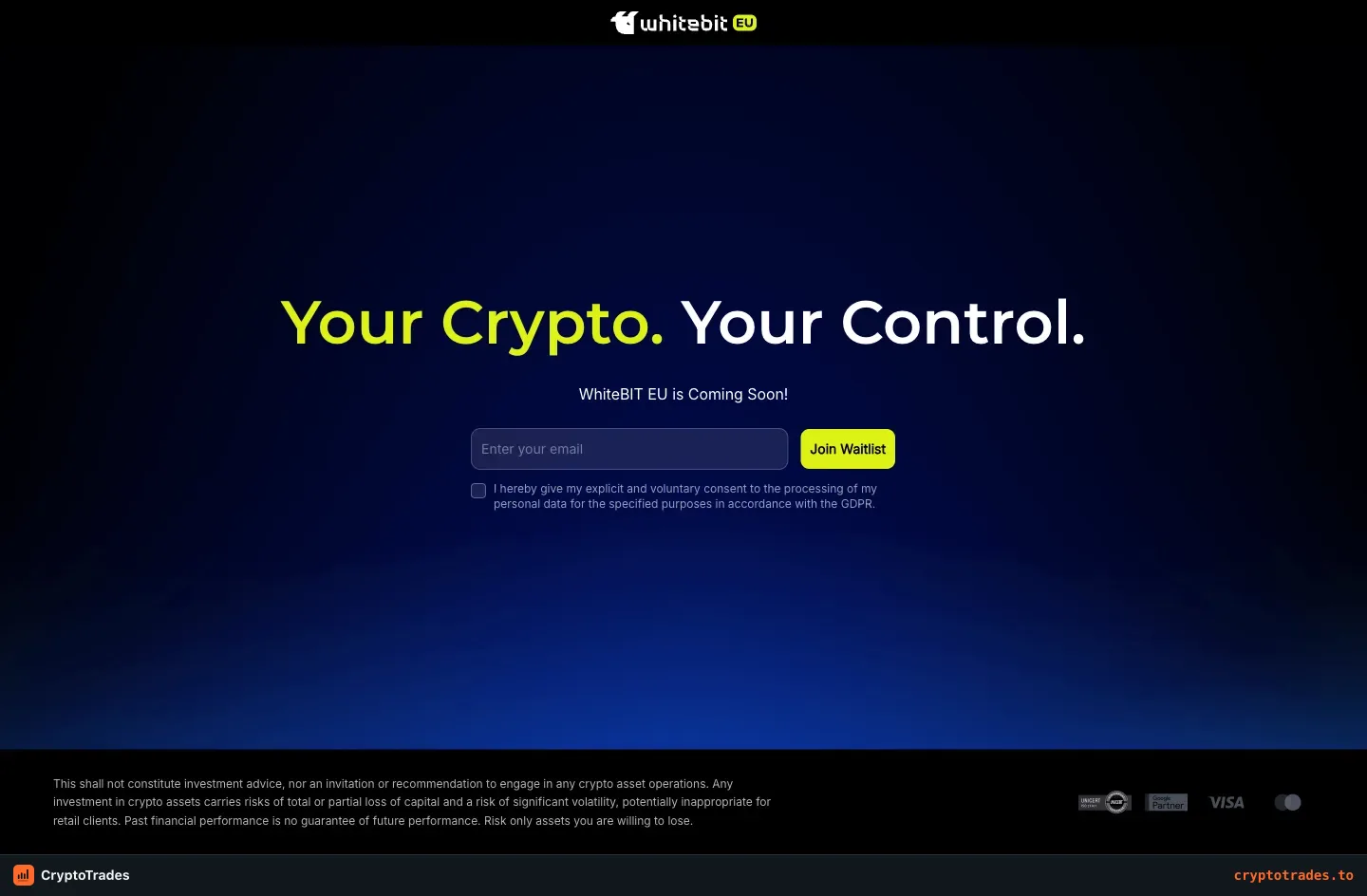
The United States, United Kingdom and Canada are also excluded from the global verification list. WhiteBIT US is separate from WhiteBIT.com, just as the planned EU operation is separate. A review that treats all three names as one product will give the wrong answer about availability, fees and leverage.
We opened the referral link and checked what it promises
The supplied partner URL redirects to the normal registration form and preserves its referral identifier. The first required choice is country of legal residence, followed by agreement to the user terms and privacy policy.
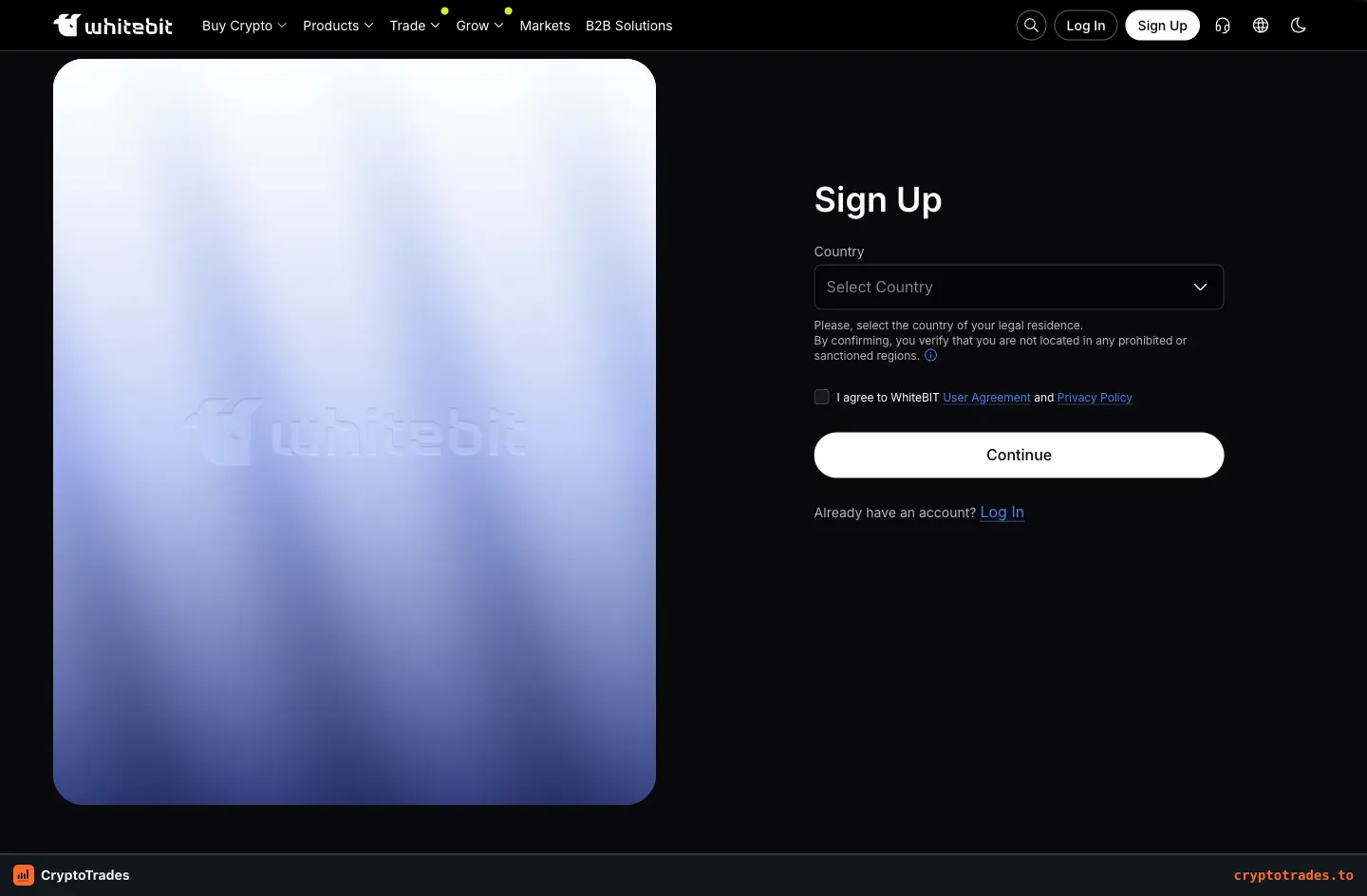
There is no fixed cash bonus stated on that screen. WhiteBIT’s public referral programme pays the person who invited you a percentage of your trading fees: 40% at the displayed base example and up to 50% with WBT benefits. It is paid monthly.
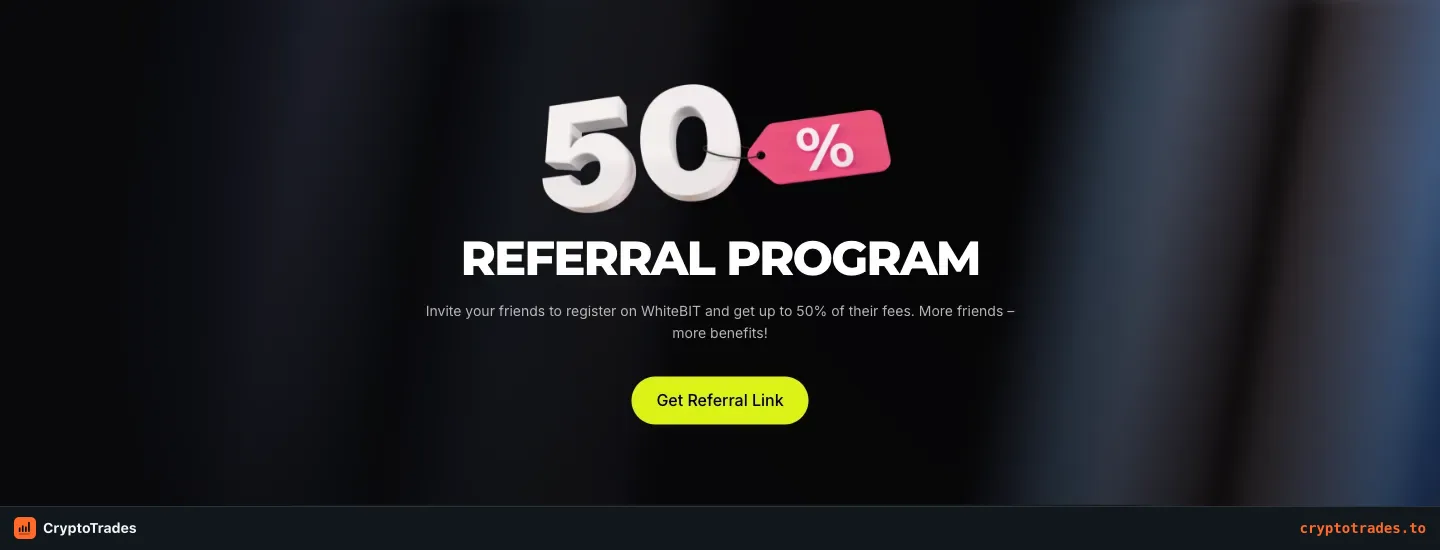
That distinction is why our button says visit WhiteBIT rather than claim a cash reward. Promotions can still appear after signup; they are separate, dated offers with their own conditions.
The fees, converted into actual money
The regular spot rate is 0.1% maker and 0.1% taker. Buy 10,000 USDT of Bitcoin and sell it again at the same price and the two executions cost 20 USDT before spread. This is the normal large-exchange rate, not a discount.
Futures are cheaper: 0.01% maker and no more than 0.055% taker. The same 10,000 USDT notional round trip costs 2 USDT if both orders add liquidity or 11 USDT if both take it. Funding is separate and can cost more than execution when a position is held across several settlements.
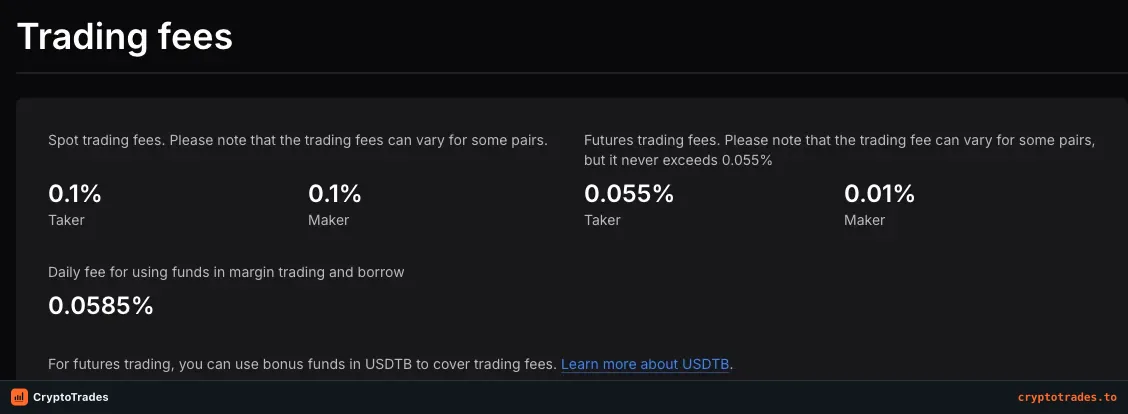
Margin borrowing costs 0.0585% per day. On 10,000 USDT borrowed, that is 5.85 USDT each day, roughly 175.50 USDT over 30 days before compounding or trading fees. A cheap entry order does not make a long-held leveraged position cheap.
VIP levels and WBT holdings can reduce some charges. We score the rate a new account actually starts on, because a discount that requires large volume, a large balance or buying the venue token is not the base price.
1,197 enabled markets, counted rather than copied
WhiteBIT’s live public markets endpoint returned 799 spot markets and 398 futures when we checked. The futures split is unusually interesting: 305 crypto perpetuals and 93 TradFi futures. The spot list covers 342 distinct base assets.
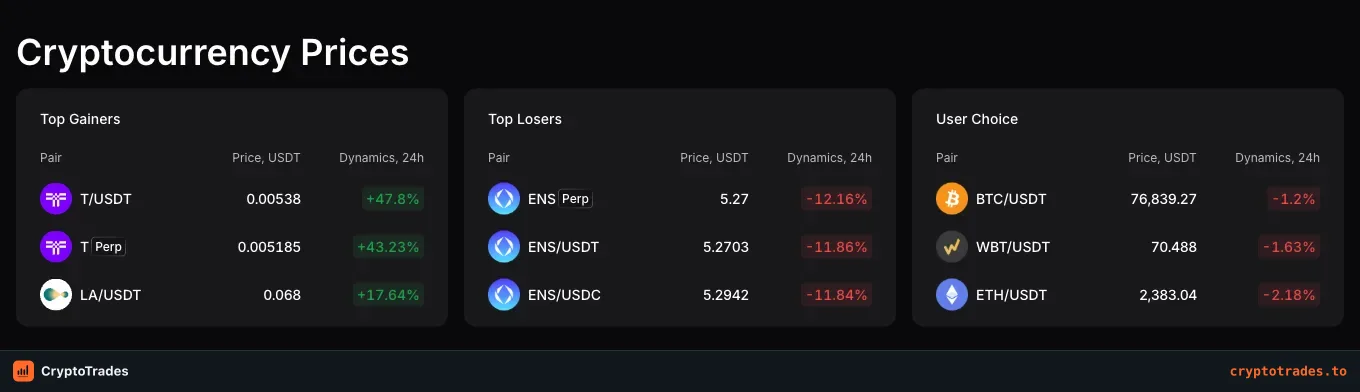
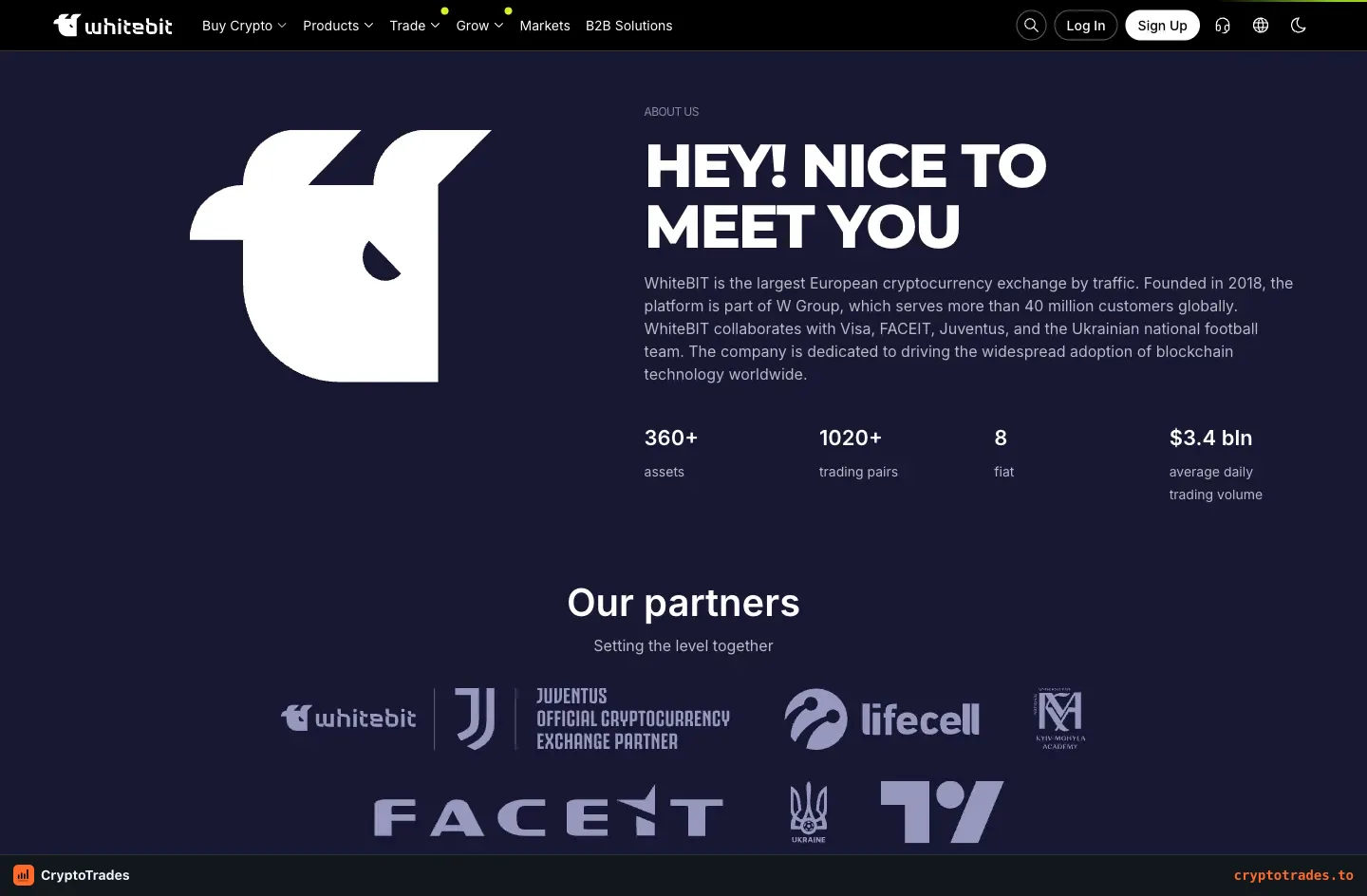
The company’s about page says 360+ assets and 1,020+ pairs. Both can be true under different definitions and dates, but neither is precise enough for comparison. We count enabled instruments by product type and publish the timestamp. Delisted rows do not count.
Spot trading is dense but logically arranged
The spot terminal places the chart, order book, recent trades and order ticket on one screen. Depth, a basic chart and TradingView are selectable. The bottom panel separates open orders, Multi-Limits, order history, trade history, positions, balances and borrows.
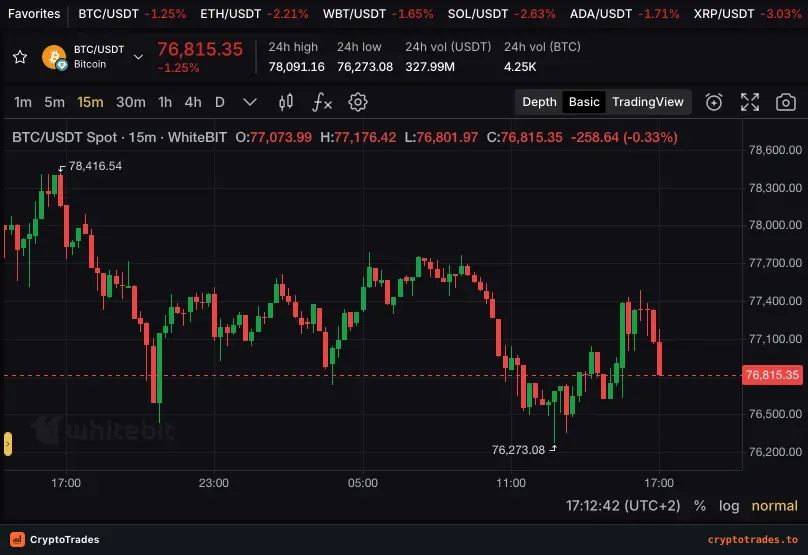
The margin switch inside the spot-shaped order ticket deserves attention. Turning it on changes the source of funds and liquidation risk without changing the visual language very much. A borrowed Bitcoin purchase is not ordinary spot ownership simply because it shares the same chart.
Futures show the numbers that matter before the order
The BTC perpetual header exposes the funding rate and countdown, mark price, index, open interest and 24-hour volume. Maximum position leverage appears in the contract selector and order panel; BTC showed 100x when checked.
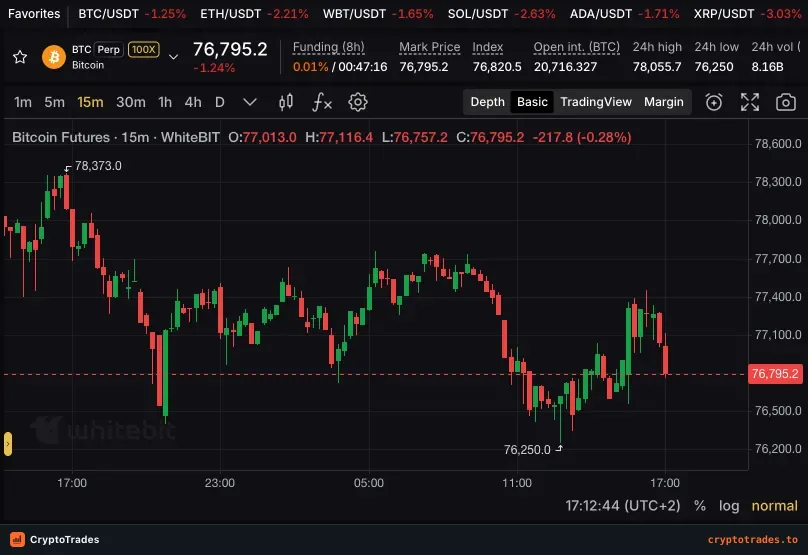
WhiteBIT uses perpetual futures rather than dated delivery for the core product. Funding normally settles every eight hours, but the venue can shorten or otherwise adjust the interval during unusual conditions. Holding at the settlement moment matters; closing before it avoids that payment but not trading fees or price loss.
At 100x leverage, one percent of adverse movement is approximately the entire starting margin before maintenance requirements and fees. The interface offering 100x does not mean 100x is a sensible default.
The 93 TradFi futures are the unusual part
WhiteBIT labels 93 instruments as TradFi futures in its public market definition. They provide price exposure to traditional assets without transferring a share, commodity or shareholder right to the trader. They also inherit the same leverage, funding, liquidation and counterparty risks as the crypto perpetual book.
The practical risk is trading while the referenced cash market is closed. A contract can continue moving on thinner crypto-exchange liquidity while the underlying venue provides no new price discovery. Anyone using these instruments should treat market hours and contract liquidity as part of the position, not background information.
Only two retail bots exist
The current bot page offers Spot Grid and Spot Martingale (DCA). That is a narrow catalogue compared with venues offering futures grids, rebalancers, arbitrage and signal bots.
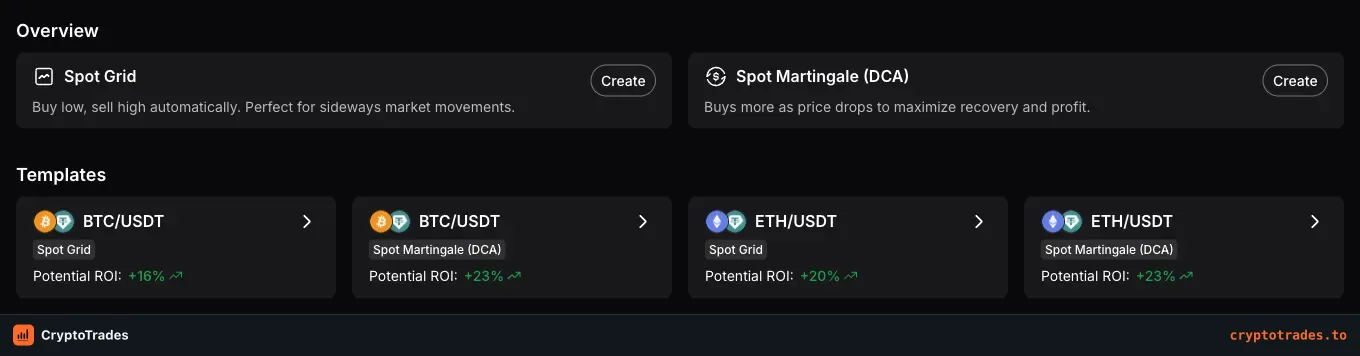
Spot Grid divides a chosen range into levels, buys on downward crossings and sells on upward crossings. It fits repeated movement inside a range. It performs badly when price leaves the range and does not return, because the bot accumulates the falling asset or sells the rising one too early.
Spot Martingale buys more after price falls to reduce the average entry. WhiteBIT adds “DCA” in parentheses, but this is not the same as investing a fixed amount on a fixed calendar. Position size grows in response to loss. The deeper and longer the decline, the more capital the strategy asks for.
Trading competitions are variable promotions, not a permanent reward
WhiteBIT also runs trading competitions scored by trading volume, realized profit and loss, or a combination of both. That can matter to already-active traders, but it is not a fixed new-user benefit: the dedicated Upcoming page showed no scheduled competitions when we checked it on 2 September 2026. WhiteBIT says prizes are credited to the Main balance within five business days after a competition ends.
That distinction matters. A past prize pool or finished tournament should not be added to the headline signup offer. Check the Active and Upcoming tabs, then read the eligible pairs, scoring method, minimum volume and disqualification rules for the specific event before increasing turnover to chase a prize.
The AI product is not the bot page
This is WhiteBIT’s strongest differentiator and competitors barely cover it. Its developer documentation offers an MCP server with 115 trading tools, allowing supported AI clients to query markets and accounts and place orders. A separate CLI exposes 110+ commands, JSON output, multiple profiles, dry-run mode and shell completion.
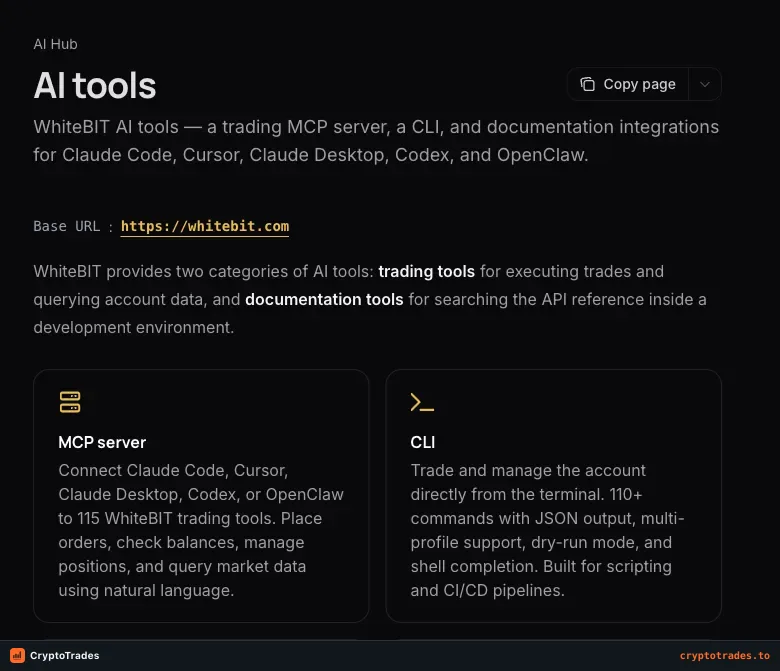
This can remove repetitive interface work, but it also moves control closer to natural-language instructions and local configuration. API scopes, withdrawal permissions, dry runs and small position limits matter more here than the model name. An AI agent can execute a bad instruction faster; it does not make the trade good.
Lending: the 100.08% number has a five-day life
The largest number on the lending page was 100.08% APR on USDT. The same card states: five days, beginners only, 200–500 USDT, ending 1 November 2026.
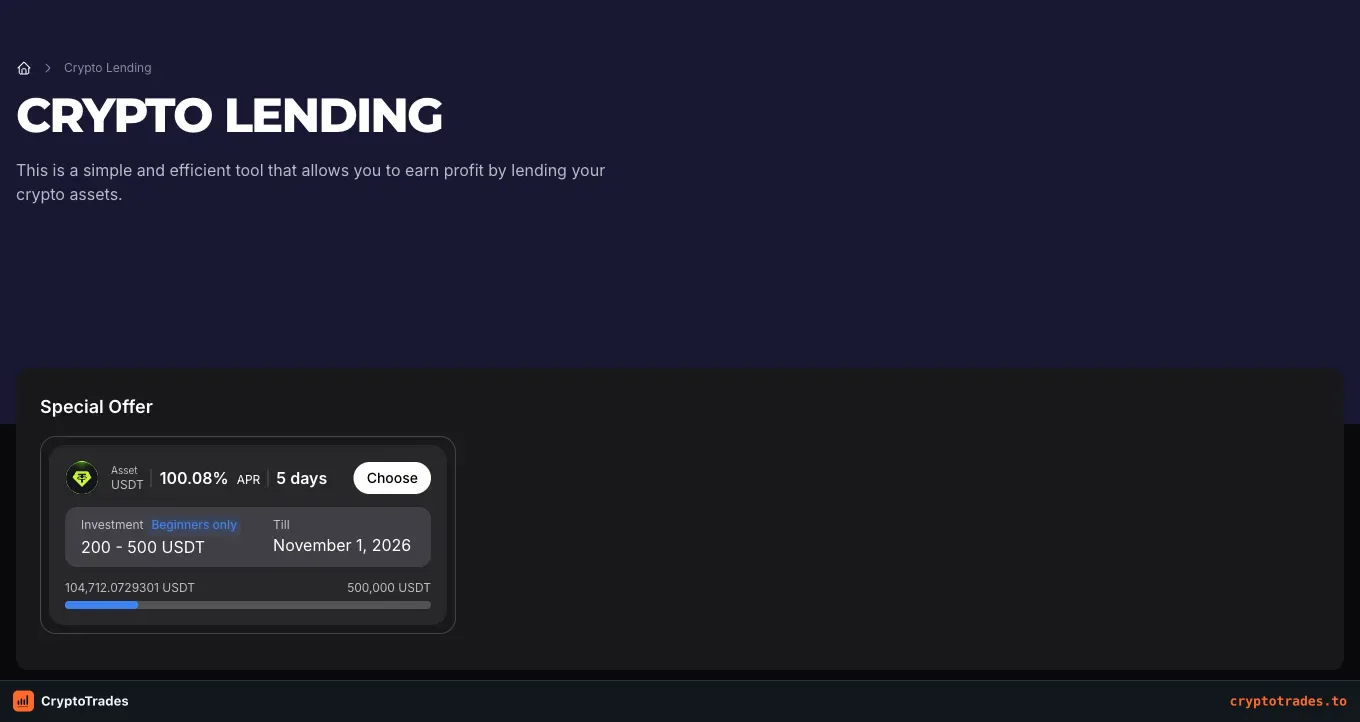
At the 500 USDT cap, a simple five-day annualised calculation is about 6.85 USDT, not 500 USDT and not 100.08% of principal. The ordinary flexible rates displayed underneath were 2.05% USDC, 1.94% USDT, 1.47% ETH and 1.37% BTC. Those are the figures that describe ongoing use.
Lending here is an exchange liability, not an on-chain position held in your own wallet. Closing quickly is convenient; it does not remove custody risk.
Auto-Invest is calendar DCA, not Martingale
Auto-Invest can schedule fiat-to-crypto or crypto-to-crypto purchases and supports price limits and a maximum number of purchases. WhiteBIT advertises no minimum amount.
This is the ordinary meaning of dollar-cost averaging: buy a set amount on a schedule. It reduces the risk of committing everything at one price. It does not make an overpriced asset cheap, and recurring conversions can still contain spread even when no separate order fee is highlighted.
Bundles simplify allocation, not risk
Crypto Bundles combine weighted assets into a single purchase and can be paired with Auto-Invest. The visible Crypto Core example allocates most of the portfolio to Bitcoin with smaller Ethereum and Solana weights.
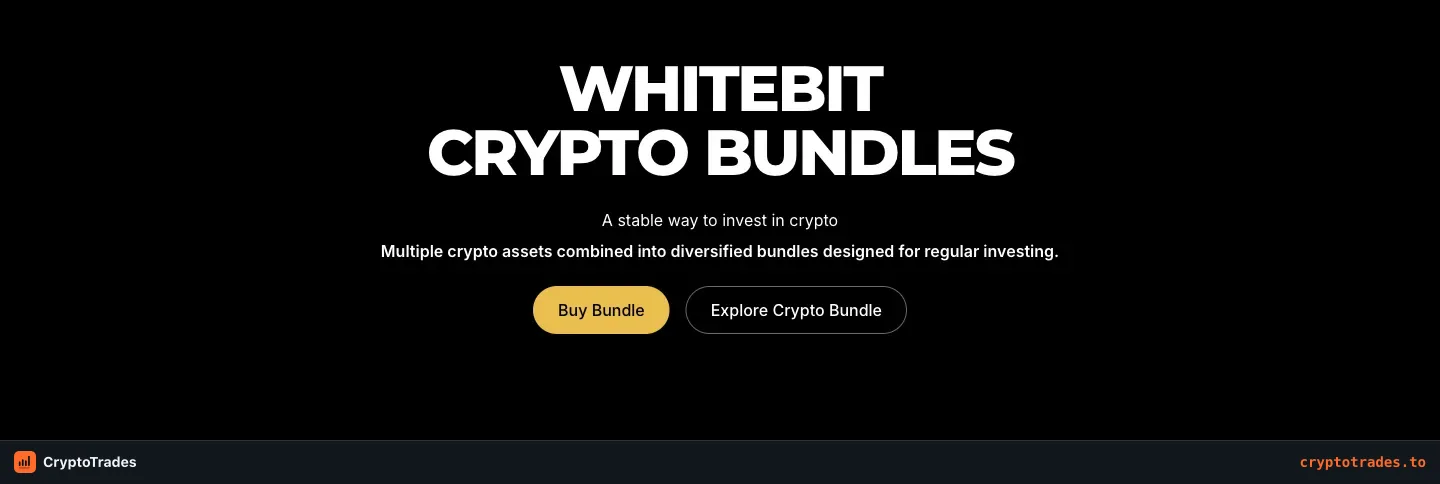
Before buying a bundle, check its exact weights, rebalancing rule, conversion costs and whether removing one asset is possible. Diversification across correlated crypto assets is still crypto concentration.
WBT makes the best conditions conditional
Holding WhiteBIT Coin can improve referral share, margin-funding discounts and other account benefits. The programme also advertises address-generation and an ERC-20 withdrawal benefit at higher holding levels.
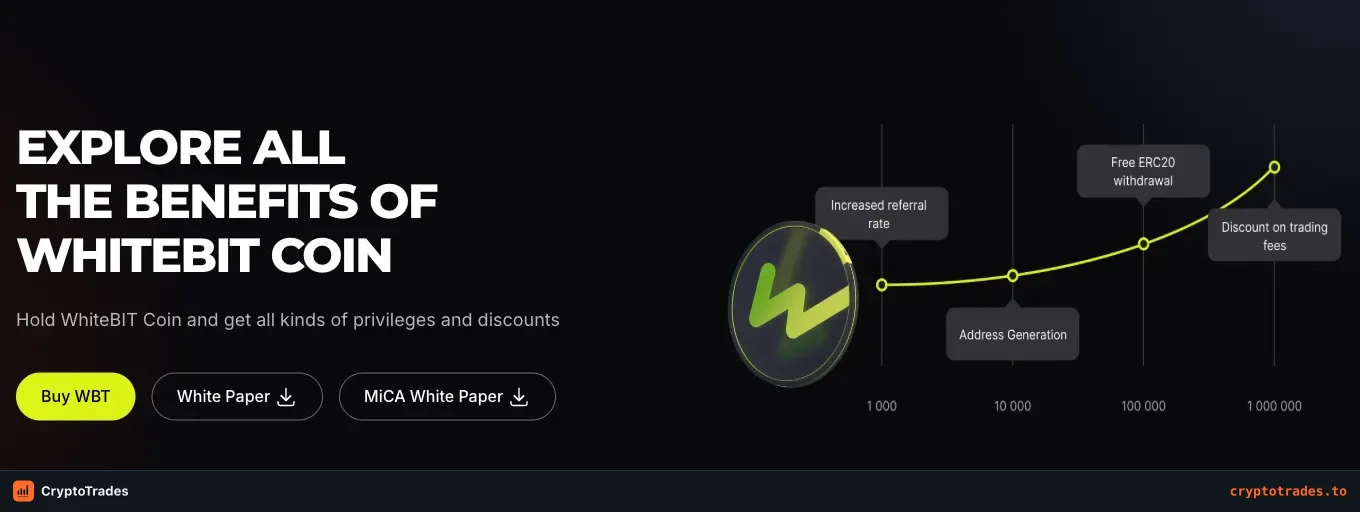
Calculate the benefit against the amount of WBT that must be held and the token’s price risk. Saving tens of dollars in fees is not economical if the required token position can move by hundreds.
VIP is for volume, not a default discount
WhiteBIT advertises up to a 100% trading-fee discount, priority support, a dedicated manager, larger withdrawal limits and as many as 150 subaccounts.
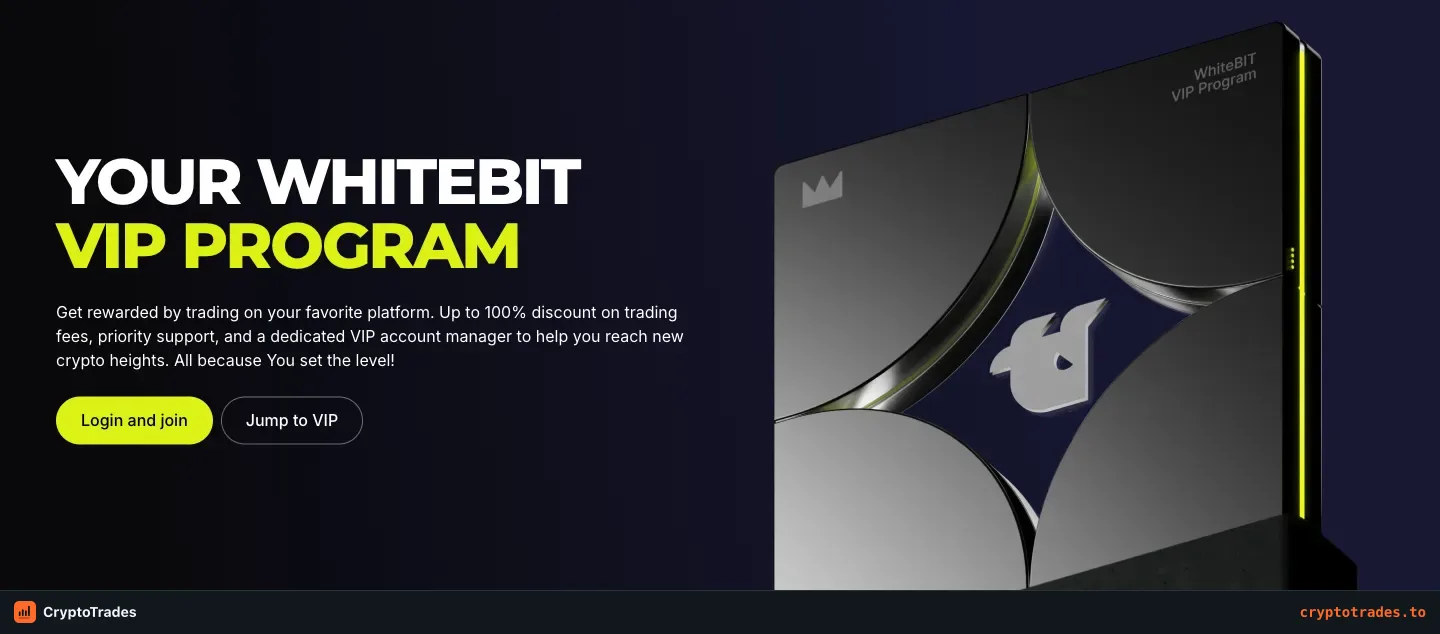
The word “up to” matters. Our fee comparison uses the regular tier because most readers will not arrive with the balance or 30-day volume needed for the upper levels.
Fiat deposits are broad, but the rail sets the price
The homepage showed multiple euro methods at the same time: Apple Pay and Google Pay at 1.5%, card processing at 1.5%, FINCI and Clear Junction at 0.1%, ZEN at 1%, and another SEPA route at 0.2%. USD wire transfers were also promoted.
A 1.5% card deposit costs 15 EUR per 1,000 EUR before trading begins. A 0.1% bank route costs 1 EUR on the same amount. Convenience can therefore cost more than the entire spot round trip. Availability depends on country and account verification, so compare the methods actually offered after selecting legal residence.
Deposit and withdrawal fees are inspectable
WhiteBIT publishes a searchable asset table with deposit fee, withdrawal fee, deposit minimum and withdrawal minimum. It also shows routes that are unavailable instead of returning a generic error after the form is filled.
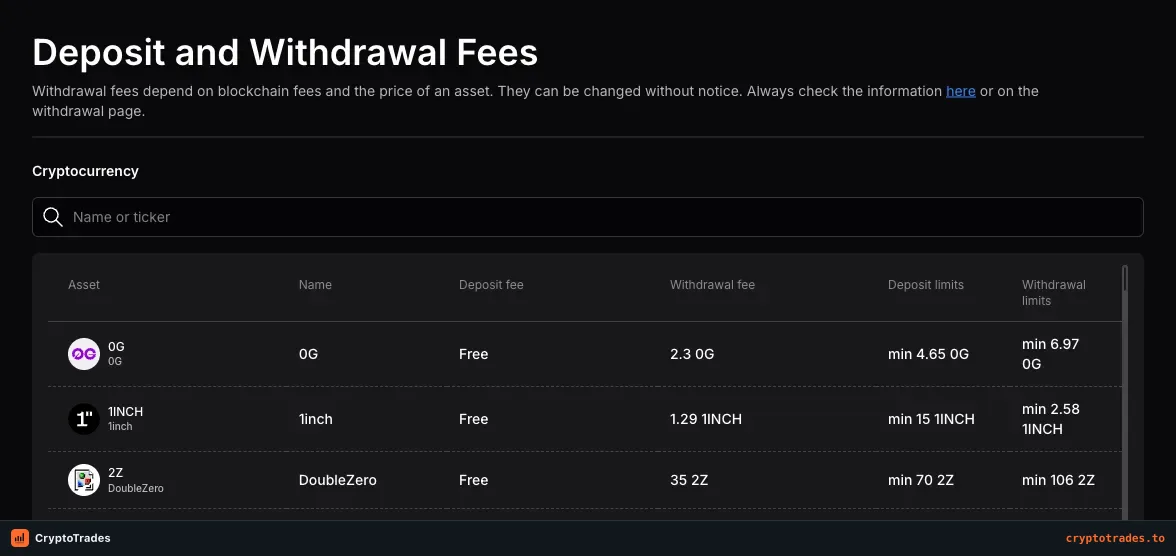
Crypto deposits are usually free, but the outgoing fee changes by asset and network. Never choose a cheap network unless the receiving wallet supports the exact same network. A successful withdrawal to an incompatible address format can be irreversible.
Our deposit, withdrawal and support tests
We observed deposits credit in seconds to a few minutes and withdrawals complete in 2 to 60 minutes, the same real-use range we recorded across our other exchange accounts. The slow end coincided with the asset or network rather than a predictable fixed exchange delay.
Our support conversation received its first response in about one minute. A second real-account observation shared with us was within five minutes, so we publish 1 to 5 minutes rather than advertising only our fastest result. Response time measures availability, not whether every complex compliance case will be solved in five minutes.
The Nova card headline needs an eligibility check
The USD card page advertises free opening, no monthly charge, no top-up fee, Apple Pay and Google Pay, and cashback of up to 10%.
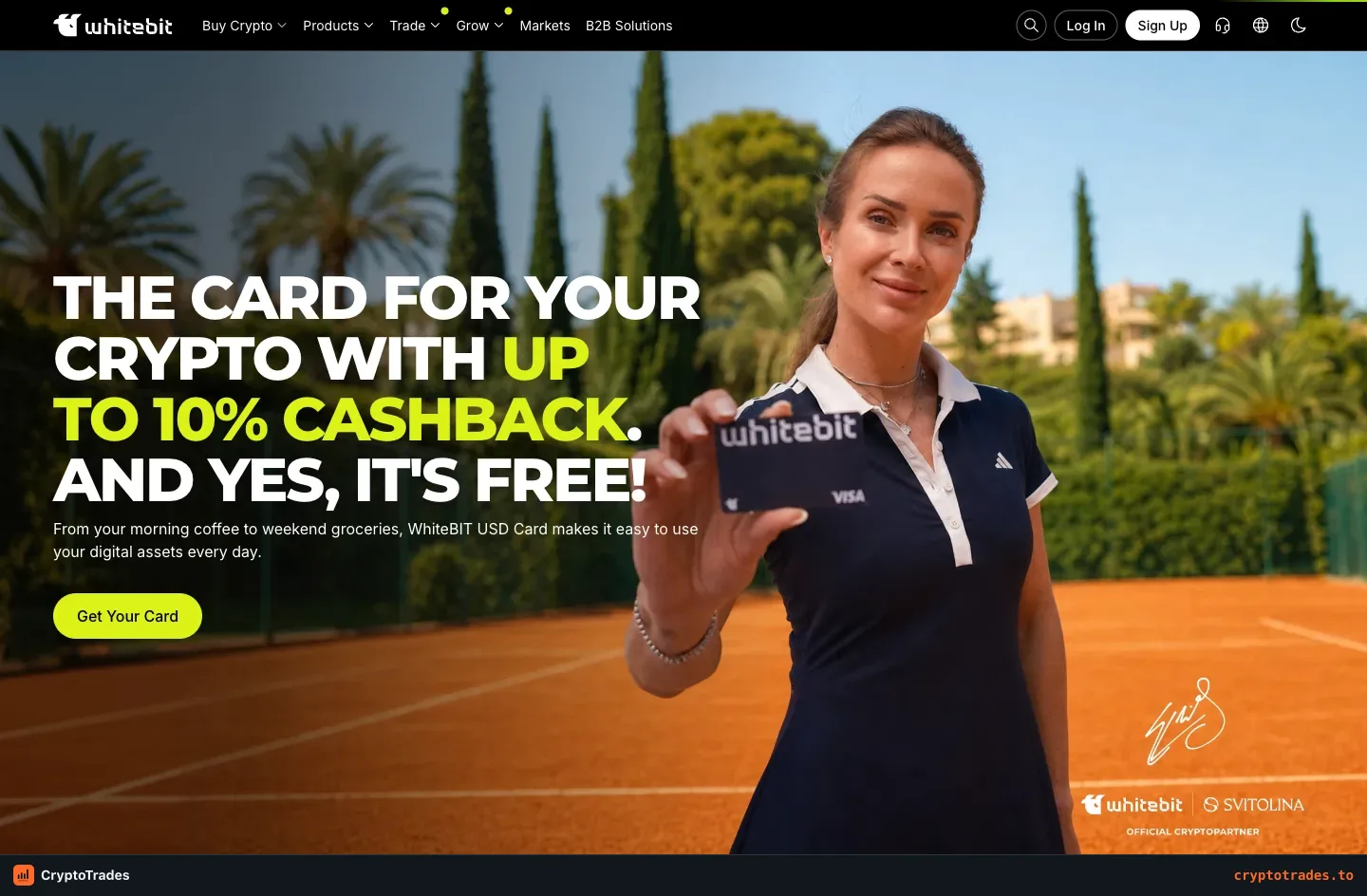
“Up to 10%” is a ceiling, not the rate on every purchase. Card availability, supported funding assets, foreign-exchange treatment, merchant exclusions and cashback caps must be checked for the user’s country. It is not currently a reason for an EU resident to attempt global signup while registrations are suspended.
Security controls and custody claims
WhiteBIT says 96% of digital assets are in cold wallets, uses a web-application firewall, multi-signature controls and a 30-million-dollar insurance fund. It cites CCSS Level 3, CER and Hacken assessments. Its history does not include a publicly established exchange-wallet loss comparable with the largest industry breaches.
For the account itself, use a unique password, authenticator-based 2FA, anti-phishing code, withdrawal address controls where available and narrowly scoped API keys. Do not enable API withdrawals for a trading integration that does not need them.
Proof of reserves is detailed and stale
The accessible Hacken report is better in scope than a wallet list. It covers proof of liabilities, proof of ownership, reserve calculation and an assessment that in-scope customer assets were covered one to one.
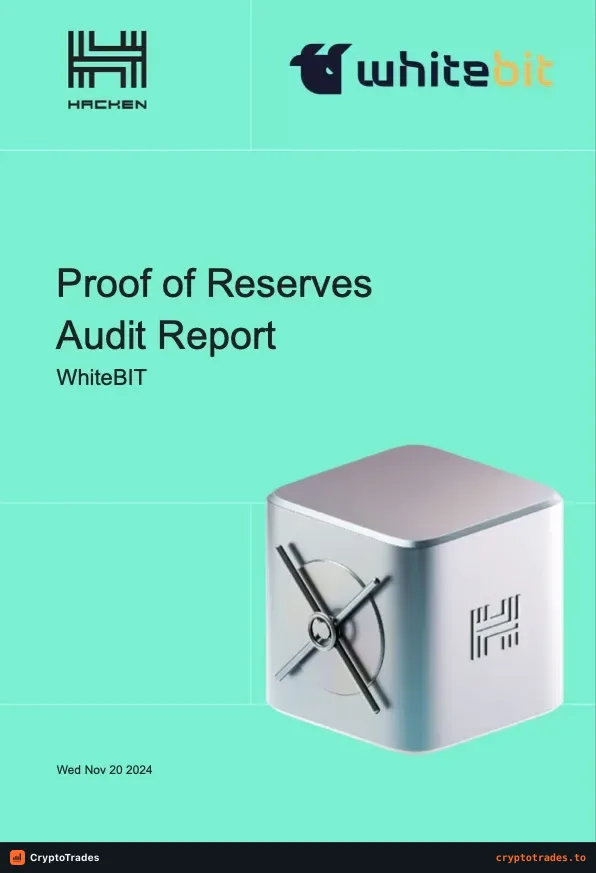
The problem is freshness. The audit snapshot is dated 18 November 2024 and the report 20 November 2024. At review time it is nearly two years old. A historical 1:1 result cannot prove that today’s liabilities are covered, and proof of reserves does not examine every corporate debt or operational obligation.
That is why the security score is 3.6 rather than a top score: strong controls and a meaningful past report, weakened by the absence of a current public snapshot.
Who WhiteBIT is actually for
WhiteBIT makes the most sense for an eligible non-US, non-UK, non-EU trader who wants competitive perpetual fees, a large futures catalogue, direct fiat options or programmable execution. The MCP/CLI stack is a real reason for a technically capable trader to investigate it.
It is a poor fit for a new EU or EEA resident today, anyone seeking a broad no-code bot marketplace, or anyone who requires recent public proof of liabilities before leaving funds with an exchange.
Methodology
We opened the global and EU sites, followed the supplied referral through its redirect, inspected every product shown above, queried WhiteBIT’s public markets, ticker and asset endpoints, checked its fee and restriction pages, read the Hacken reserve report, and compared the ranking review set. Market counts and fees were rechecked on 2 September 2026.
Operational timings come from real-account use: money was deposited and withdrawn, and support was contacted. Screenshots are first-party product or primary audit evidence. No help-center screenshot is used as decoration, and no reward is described as cash unless the terms make it cash.
The verdict
WhiteBIT earns 4.4 out of 5. Its futures economics, market breadth, fiat access and exceptional developer tooling are stronger than most reviews acknowledge. Our withdrawals completed and support was among the fastest we have tested.
The deductions are not cosmetic: EU/EEA onboarding is presently unavailable, WBT is woven into the best conditions, the retail bot catalogue has only two strategies, and the public reserve evidence is old. Eligible advanced users have good reasons to use it. European newcomers and anyone demanding current solvency evidence have equally good reasons to wait.
Where WhiteBIT does not accept traders
United States, United Kingdom, Canada, European Union and EEA (new registrations suspended), Afghanistan, Belarus, Iran, Libya, Myanmar, North Korea, Russia, Somalia, South Sudan, Sudan, Syria, Venezuela, Yemen.
Taken from the venue's own terms. Restrictions change; check before you deposit.
WhiteBIT questions traders actually ask
01Is WhiteBIT a safe exchange?
WhiteBIT has meaningful controls: it says 96% of assets are held cold, uses a web-application firewall and has passed Hacken and CER security reviews. Its accessible Hacken proof-of-reserves report also tested liabilities and ownership, not wallets alone. The catch is date: the audit snapshot is from 18 November 2024. That is useful historical evidence, not current proof of solvency, so we rate security positively but not at the top of the scale.
02Is WhiteBIT trustworthy?
Our account operated normally: deposits credited in seconds to a few minutes, withdrawals completed in 2 to 60 minutes, and support replied in 1 to 5 minutes. WhiteBIT also publishes fees, limits and network availability in a searchable table. Those are concrete trust signals. They do not remove exchange custody risk, and the old reserve report remains the largest disclosure weakness.
03Is WhiteBIT allowed in the US?
WhiteBIT.com does not accept United States residents or US identity documents. WhiteBIT US is a separate company and product, so an American should use the US-specific service only if it is available and licensed in the relevant state. A VPN does not change residency or identity-document requirements.
04Can I use WhiteBIT in the UK?
No. The current WhiteBIT identity-verification rules list the United Kingdom among the jurisdictions whose residents and identity documents are not accepted on the global platform.
05Can I use WhiteBIT in the EU?
Not for a new global account right now. WhiteBIT.com displays a notice that new EU and EEA registrations are suspended for MiCA compliance, while whitebit.eu currently shows a coming-soon page and waitlist. Existing access and individual products may differ, but the referral link should not be presented as an available EU signup.
06What are the trading fees on WhiteBIT?
The regular spot ceiling is 0.1% maker and 0.1% taker. Futures are 0.01% maker and no more than 0.055% taker. Margin borrowing costs 0.0585% per day in addition to trading fees. Certain pairs and VIP tiers differ, so the visible rate in the order ticket is the final check before placing an order.
07What does it cost to withdraw from WhiteBIT?
There is no single withdrawal fee. WhiteBIT publishes a fixed or provider-specific fee for each asset and network, and warns that it can change with network cost and asset price. The same table shows minimum deposits, minimum withdrawals and unavailable routes. Always select the network first, because that choice changes both price and compatibility.
08How long does a WhiteBIT withdrawal take?
Our real withdrawals completed in 2 to 60 minutes. The exchange controls approval and broadcast; the destination chain controls confirmation after that. Asset maintenance, a recently changed security setting, compliance review and network congestion can all extend the time, so our range is an observation rather than a guarantee.
09Does WhiteBIT require KYC?
Yes. Registration starts by selecting the country of legal residence, and identity verification is required for normal exchange use. WhiteBIT can also request source-of-funds and transaction-origin documents under its compliance rules. Product access varies by country even after verification.
10Which country is WhiteBIT from?
WhiteBIT was founded in 2018 and identifies Vilnius, Lithuania with its current group operations. Services are supplied through different legal entities by region, so the contracting entity in the user agreement matters more than a single headquarters label.
11Does WhiteBIT have trading bots?
Yes, but the retail catalogue is narrow: Spot Grid and Spot Martingale, which WhiteBIT also labels DCA. Grid repeatedly trades a range; Martingale buys more as price falls, increasing capital at risk. The ROI figures on the templates are potential figures, not promised returns. WhiteBIT's separate MCP and CLI are developer trading interfaces rather than managed bots.
12What bonus does the WhiteBIT referral link give?
The public referral material says the referrer receives 40% to 50% of the invited user's trading fees. It does not promise a fixed cash payment to every new user. When checked, WhiteBIT separately offered eligible beginners a five-day lending rate of 100.08% APR on 200–500 USDT; that was a dated, capped promotion and not a permanent referral reward.
13Does WhiteBIT publish proof of reserves?
Yes. Hacken's report covers proof of liabilities, ownership, reserve calculation and an assessment of 1:1 coverage for the assets in scope. Its audit snapshot is dated 18 November 2024, however, so it cannot establish today's balances. Proof of reserves also is not a full audit of every corporate liability.
14How much margin is needed for WhiteBIT futures?
It depends on leverage and the contract's maintenance requirement. At 20x, a 100-dollar margin controls a 2,000-dollar position before fees; a move of roughly 5% against it can consume that starting margin before maintenance and liquidation mechanics are considered. WhiteBIT allows up to 100x on selected contracts, where the distance to liquidation is much smaller.
Reviewed by CryptoTrades.to
Independent crypto research and market-data team. CryptoTrades.to is a pseudonymous group of crypto specialists active in the market since 2015. The group focuses on Bitcoin, exchange products, market structure and custody risk, and includes a trader with 15 years of market experience. Team members remain anonymous because connecting public identities to cryptocurrency activity and holdings can create personal-security risks.
Scoring method: how we rate an exchange.