How we scored it
Binance is the broadest venue in our live database and still the reference book for spot liquidity. It is also a maze of regional entities, promotions and instruments whose risk changes completely between spot, margin, bots and derivatives.
- Cost
- Maker fee
- 0.100%
- Sign-up offer
- No universal cash bonus; the visible referral page promises up to $1,000 in fee rebates.
- Trading
- Products
- spot, perp, futures, options, bots, copy, earn
- Assets listed
- 500
- Access
- Identity verification
- required
- Fiat deposits
- Yes
- Company
- Founded
- 2017
- Headquarters
- Entity and regulator vary by region
- Proof of reserves
- Published
The first support response arrived in 2 to 5 minutes in our own logged-in account tests. The score reflects the measured response speed and does not promise the same result for every case.
- 1,927 active markets in our database: 1,358 spot and 569 perpetual instruments.
- Deep major-pair books and a price that independently contributes to our composite.
- Regular futures fees of 0.020% maker and 0.050% taker.
- Ten visible automation tools, from grids and DCA to TWAP, VP and funding arbitrage.
- Inspectible reserves: dated ratios, customer and wallet balances, Merkle root and zk-SNARK verification.
- There is no single Binance product: entity, stablecoins, derivatives and payment rails vary by residence.
- Leveraged products sit close to ordinary spot buying in an interface built for breadth, not restraint.
- The $1,000 referral figure is a fee-rebate ceiling, not signup cash.
- Bot marketplace returns are survivor snapshots; one observed 61.33% ROI card carried 89.90% seven-day drawdown.
- Our deposits credited in seconds to a few minutes, withdrawals took 2 to 60 minutes and support answered in 2 to 5 minutes.
The short verdict
Binance is the strongest all-round execution venue in our four-exchange dataset, but not the easiest place to learn what an instrument does. Its advantage is measurable: 1,927 active spot and perpetual markets, independent live prices and deep books on majors. Its disadvantage is on the same screen: spot, borrowed spot, perpetuals, options, copied traders and leveraged bots look like neighboring ways to trade although their failure modes are completely different.
Use it for breadth, price discovery and active execution in a supported jurisdiction. Do not use it as a substitute for understanding leverage, and do not treat today’s reserve surplus as permission to store long-term savings there.
First identify which Binance serves you
Binance.com excludes the United States, where Binance.US is a separate product. European asset and derivatives access follows European rules. Our current browser session was served terms for three ADGM-regulated entities: Nest Exchange, Nest Clearing and Custody, and Nest Trading. That identifies this session, not every reader.
Check the footer, account terms and fee page after identity verification. If a public feature disappears after verification, the verified account wins. A VPN only postpones the mismatch until a compliance or withdrawal check.
Live market breadth: 1,927 instruments
Our collector read 1,358 active spot and 569 active perpetual markets on 2 September 2026. These are pairs, not coins: BTC/USDT and BTC/USDC count separately because they are distinct executable books.
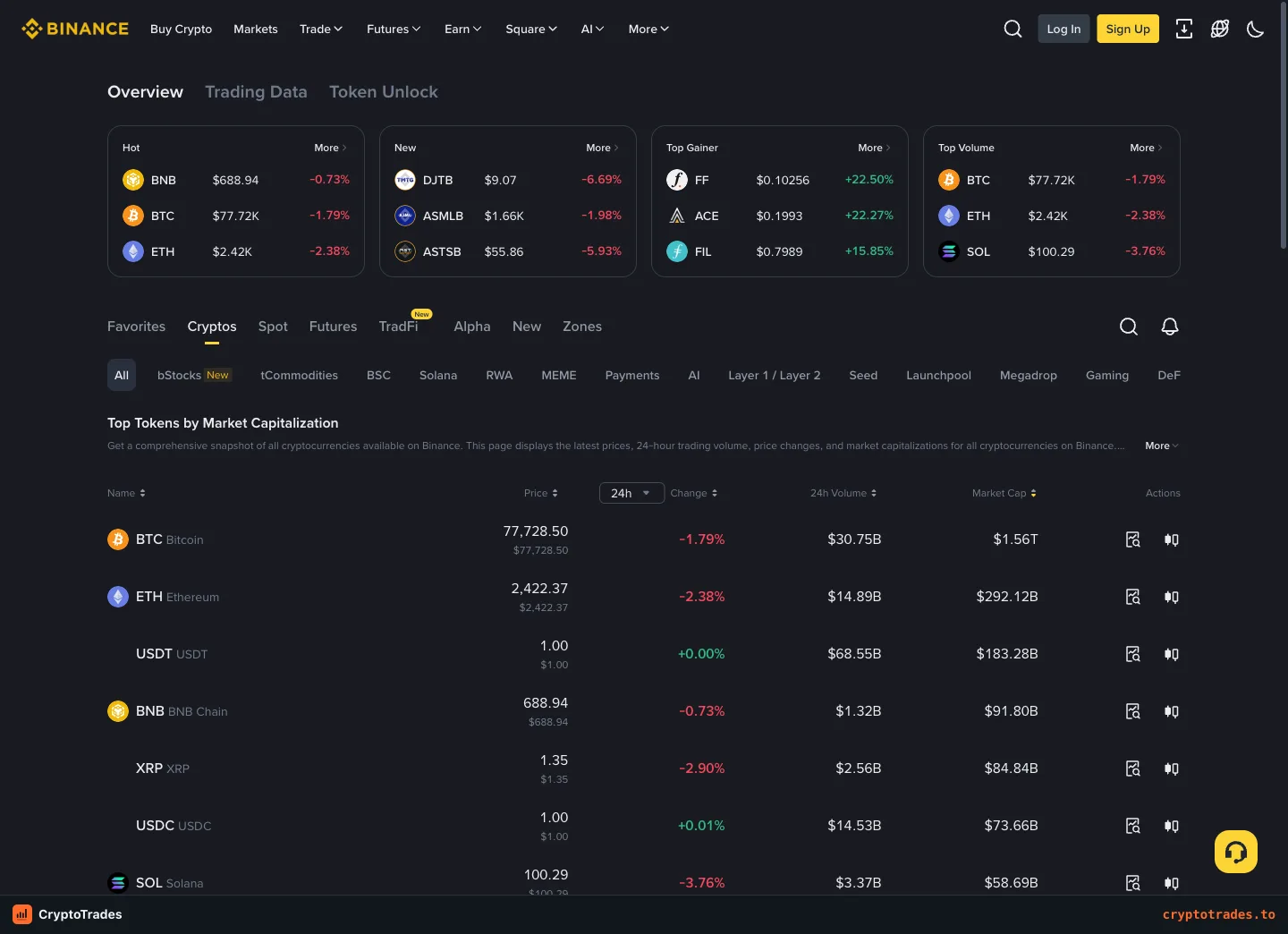
On large pairs Binance is price-forming rather than a thin reseller. Its WebSocket tick is one independent input to our composite, normalized centrally and delivered to visible browser rows in 250-millisecond batches.
Spot: deep book, ordinary base fee
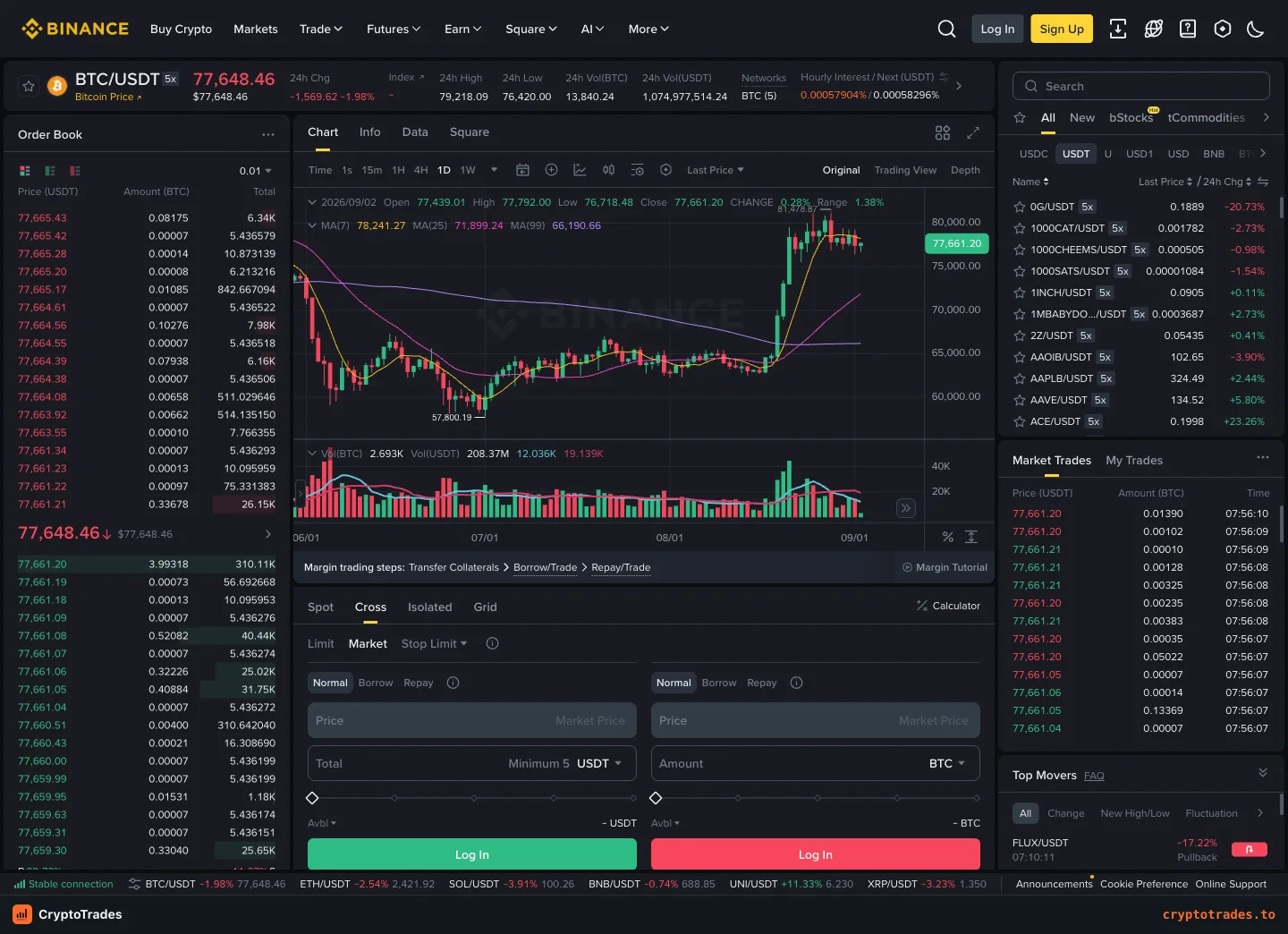
The spot screen keeps order book, chart, trades, pair list and ticket together. It supports normal market and limit workflows plus conditional orders and advanced execution.
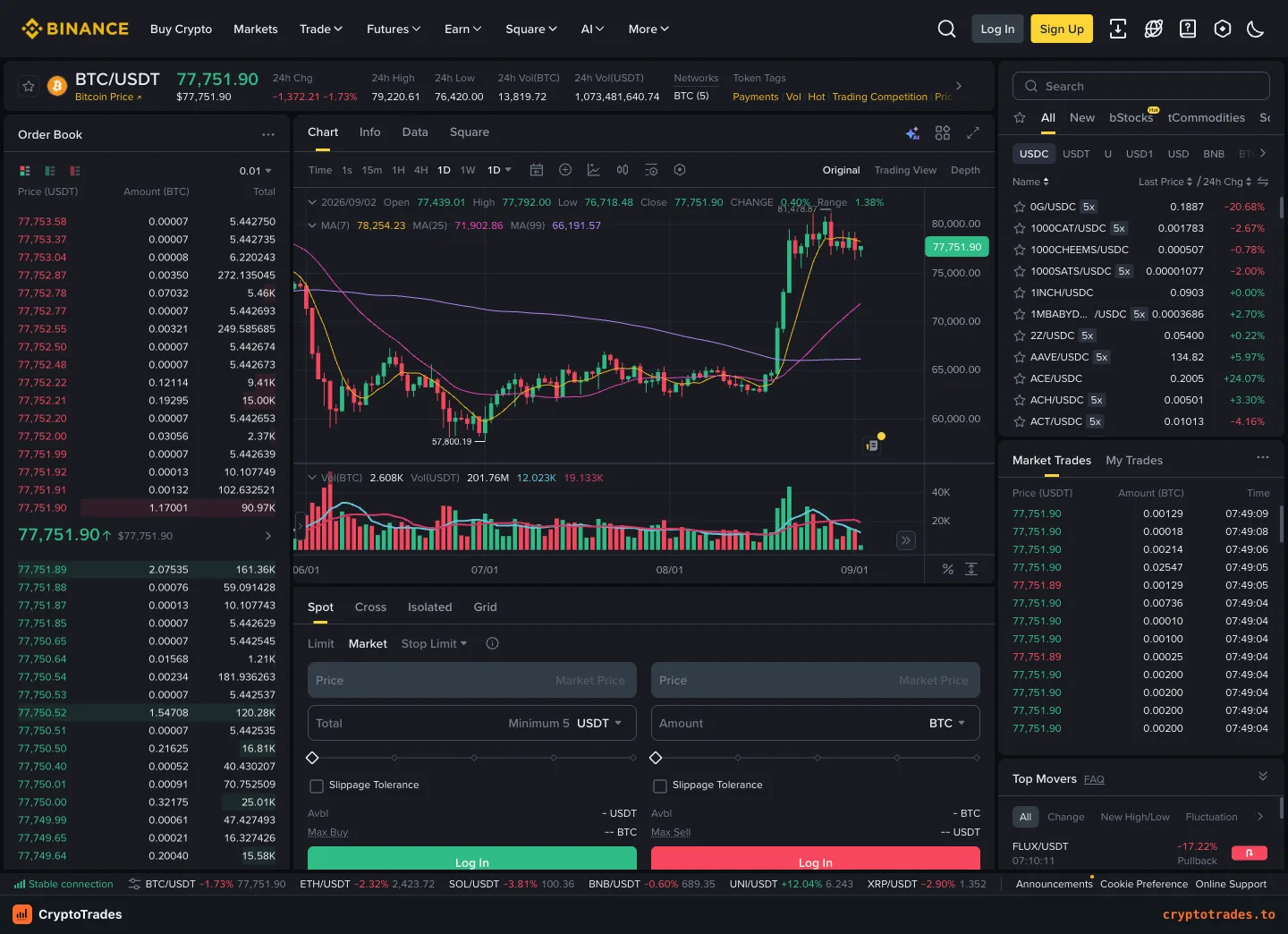
Regular spot costs 0.100% maker and taker: $10 on a $10,000 fill and $20 for a same-sized round trip before spread. Paying fees in BNB shows 0.075%, but requires enough BNB and the deduction enabled.
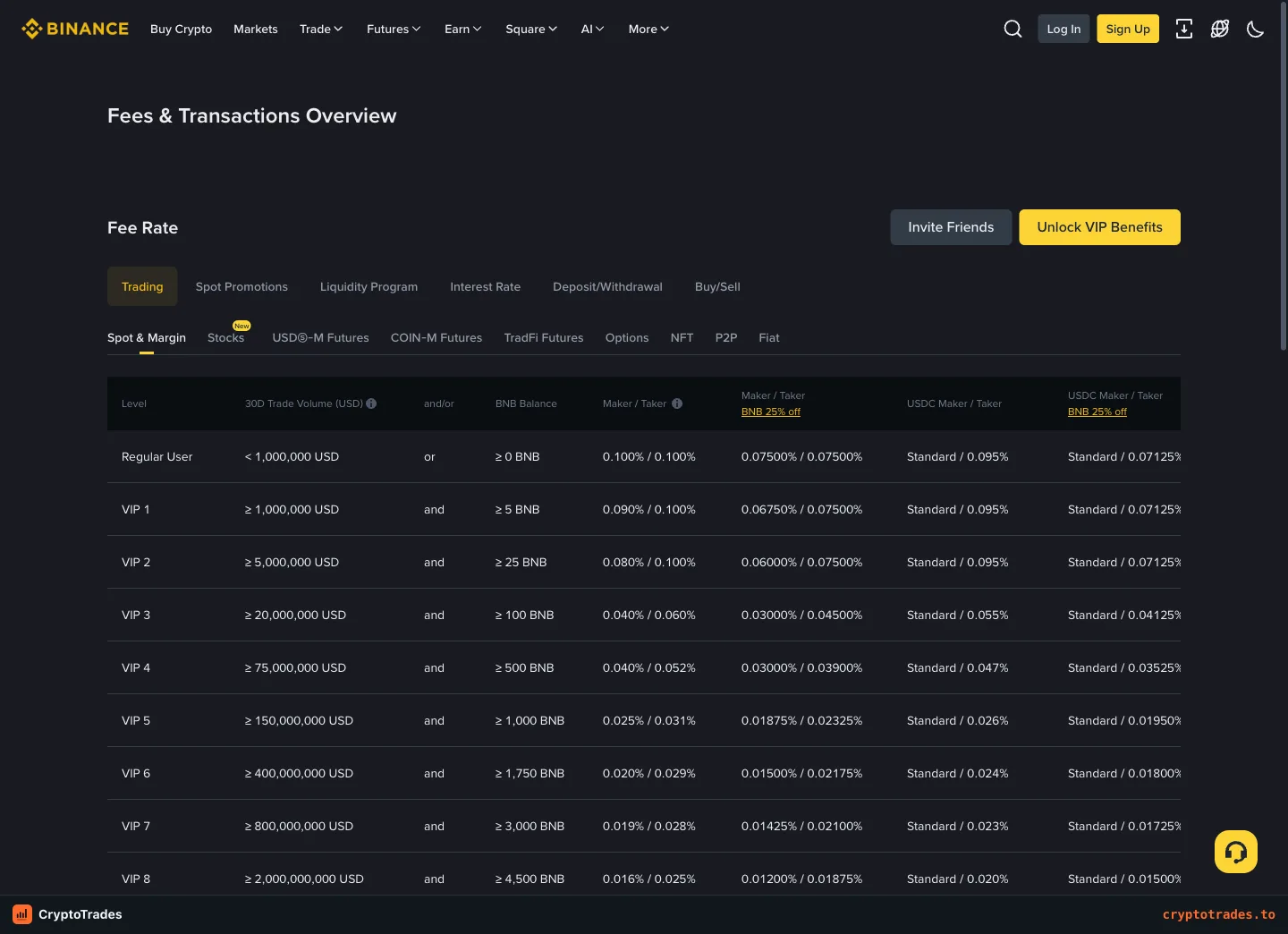
The first VIP step needs $1 million of 30-day volume and five BNB. Most retail accounts should compare the regular row, not build a decision around tiers they will never reach.
Convert and recurring buys
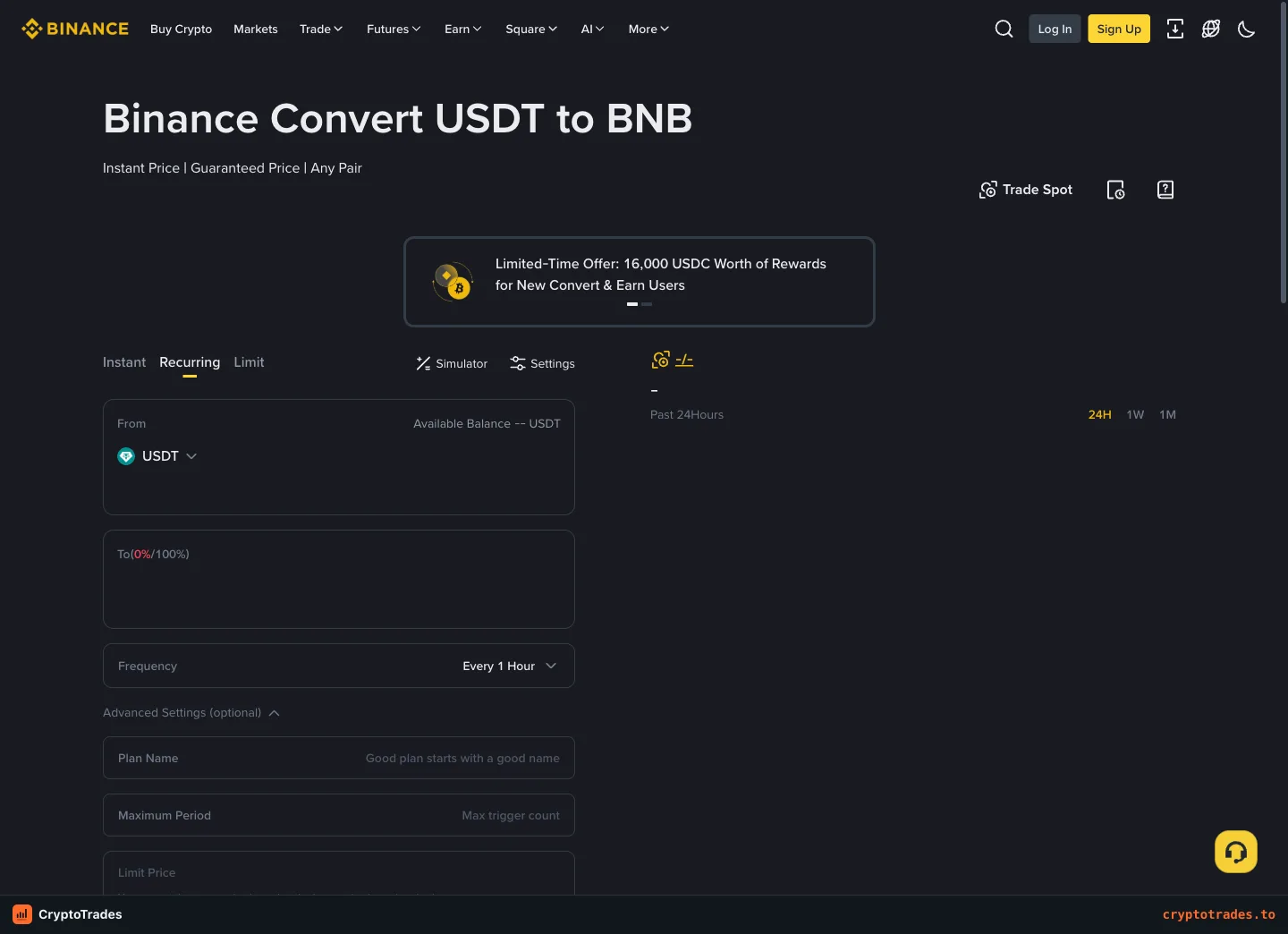
Convert hides the book behind an instant quote; its recurring mode schedules repeated purchases and accepts a maximum price. “Zero trading fee” need not mean zero cost because the quote can contain spread.
Margin is debt wearing a spot-shaped interface
Cross Margin shares collateral across positions; isolated margin contains debt to a pair. Both charge borrowing interest and can liquidate collateral. Current Cross 5x rules also apply collateral haircuts when calculating margin and borrowing capacity.
Futures fees are lower because the risk is different
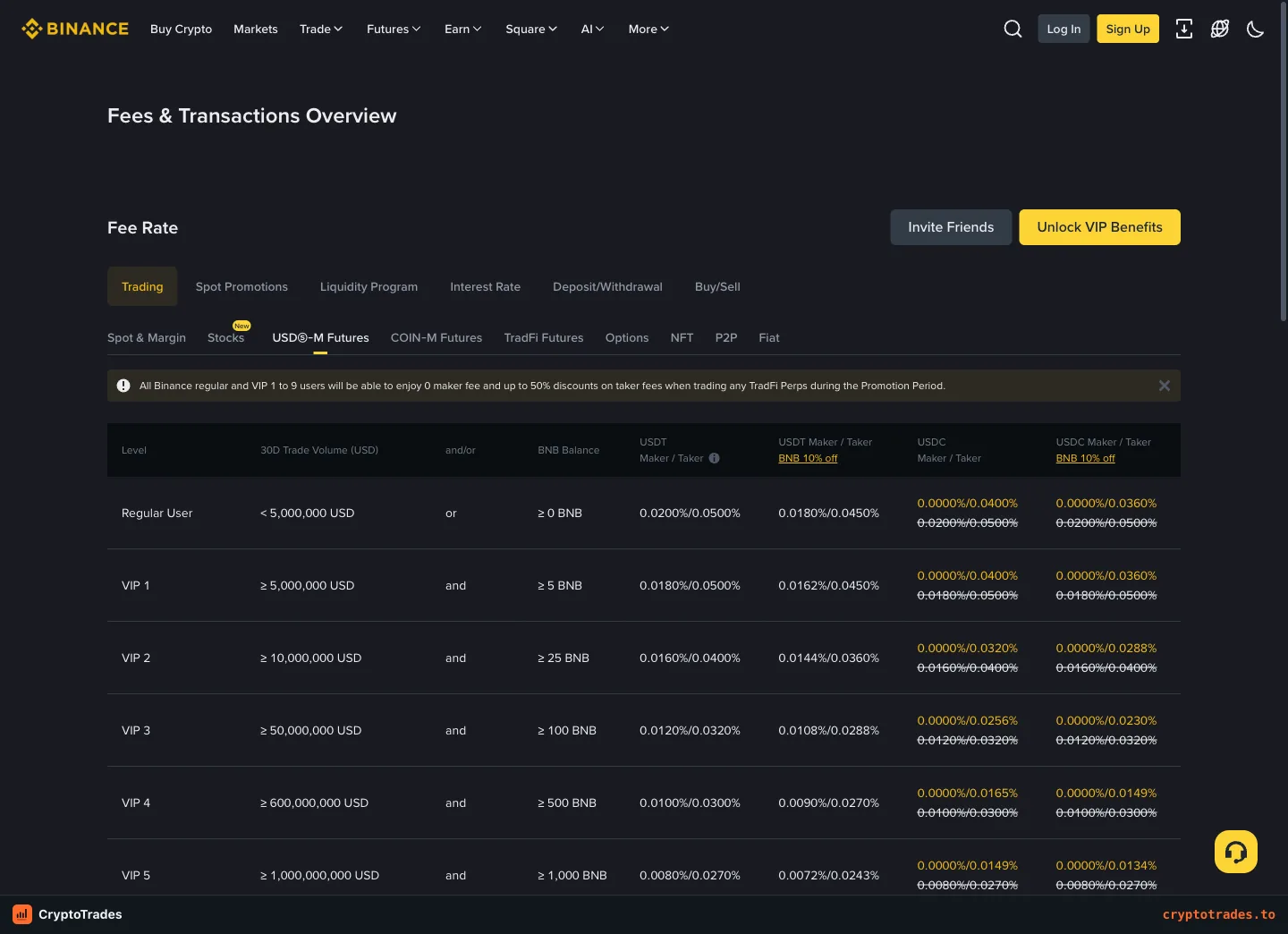
Regular USDT futures cost 0.020% maker and 0.050% taker, falling to 0.018%/0.045% under the displayed BNB reduction. A $10,000 taker round trip therefore costs $10 before funding.
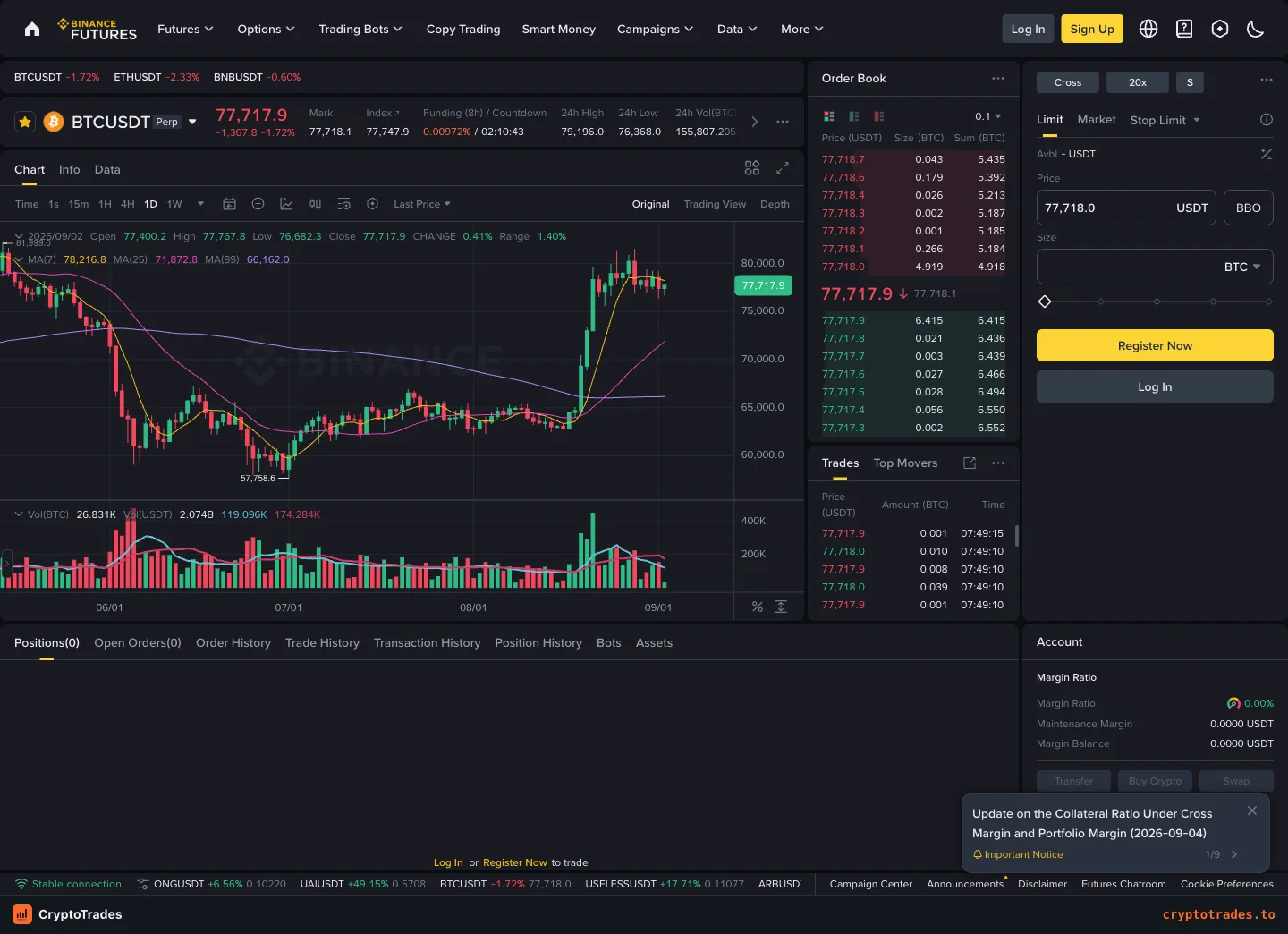
Perpetuals add funding, mark-price liquidation and path risk. A lower trading fee does not make them cheaper to hold automatically.
Options are a volatility product
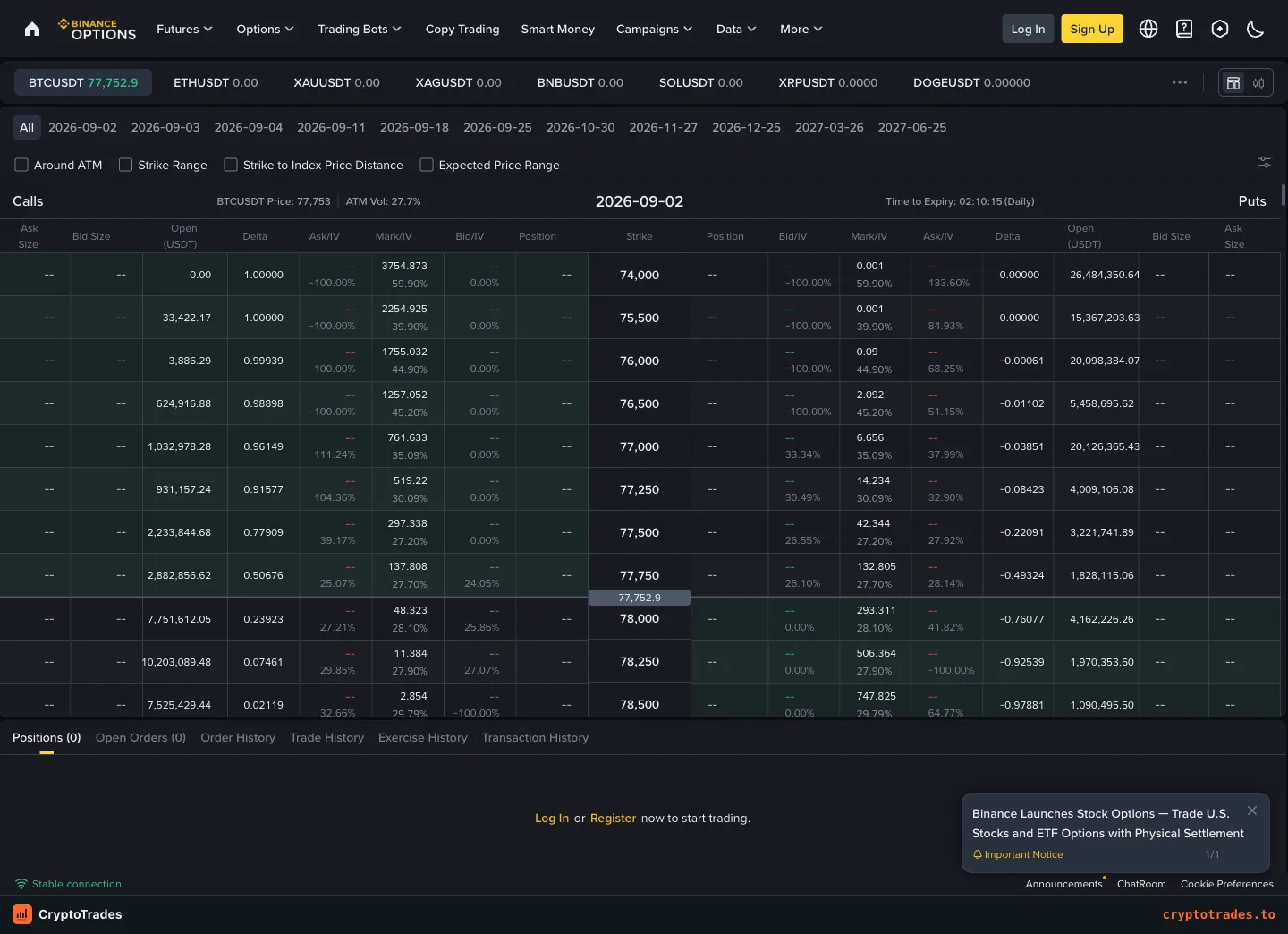
Calls and puts vary by strike, expiry, implied volatility and Greeks. Being correct about direction is insufficient if the move is too small or too late.
Ten bots, ten different jobs
The current catalogue exposes Spot Grid, Futures Grid, Position Snowball, Futures DCA, Arbitrage, Rebalancing, Spot DCA, Spot TWAP, Futures TWAP and Futures VP.
| Tool | Job | What breaks it |
|---|---|---|
| Spot Grid | Trade a defined range | One-way fall leaves the bot holding the coin |
| Futures Grid | Leveraged long/short/neutral grid | Breakout, funding or liquidation |
| Position Snowball | Compound floating profit | Expands exposure before reversal |
| Futures DCA | Add after adverse movement | Geometric position growth |
| Arbitrage | Hedge spot/perp for funding | Basis, leg mismatch, funding reversal |
| Rebalancing | Restore portfolio weights | Buys relative losers through broad drawdown |
| Spot DCA | Scheduled accumulation | Structural decline |
| TWAP / VP | Split large execution | Market moves while the schedule continues |
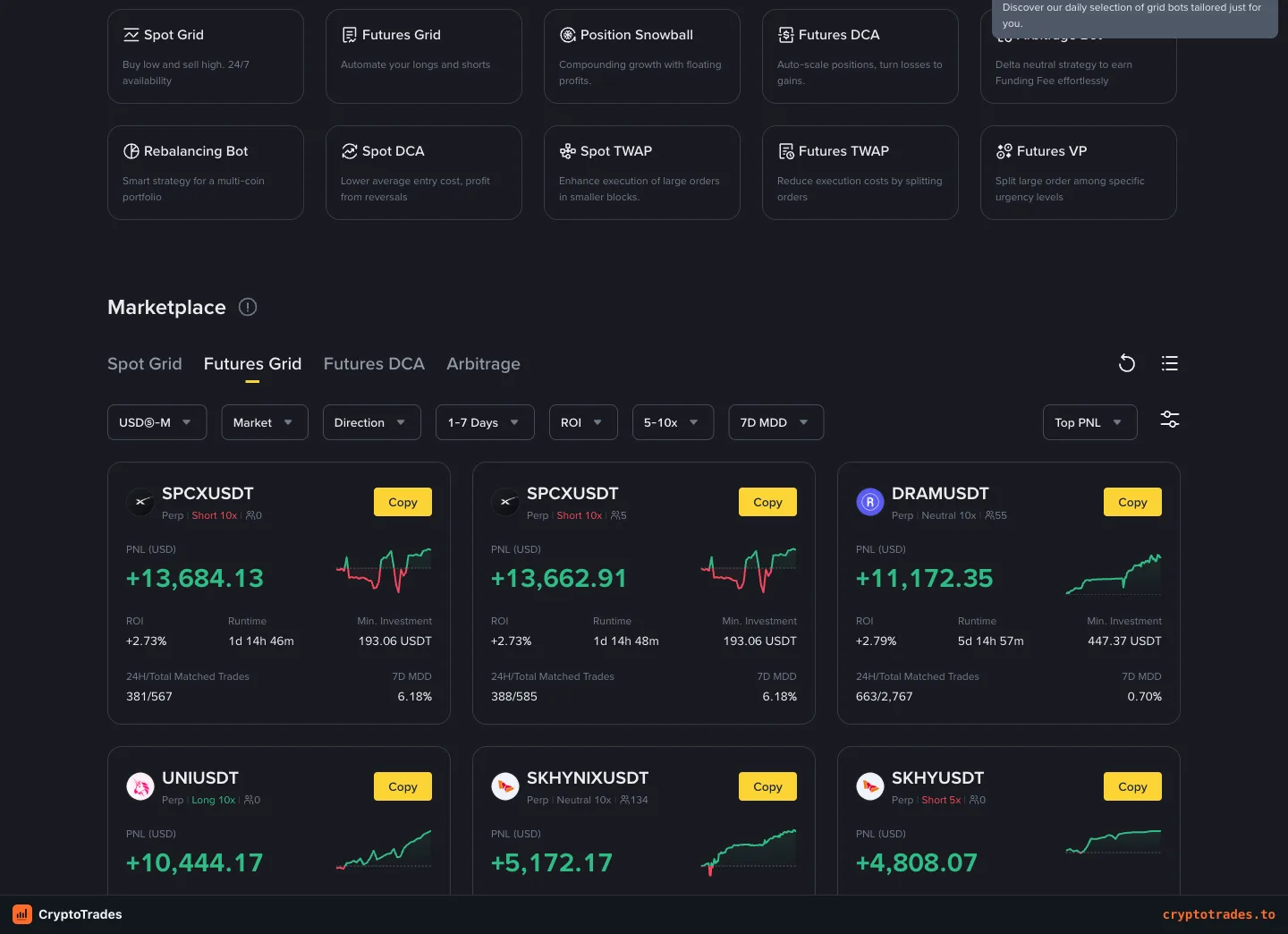
One observed strategy combined 61.33% ROI with 89.90% seven-day maximum drawdown. That is nearly erased capital, not a smooth winner. Rankings also select surviving strategies after the outcome; failed equivalents disappear.
Spot Grid: fees versus spacing
More grid levels create more potential fills but less gross profit per fill. If spacing is too close to twice the applicable fee plus spread, activity becomes turnover rather than profit. Below its range the bot stops cycling and increasingly behaves like a long position.
Futures DCA: a lower entry is not lower risk
The page says it can “turn losses to gains.” Adding to a leveraged loser moves break-even closer while increasing notional and bringing liquidation closer. Calculate every safety order, total margin, funding and the final liquidation price before starting.
Funding arbitrage is hedged, not risk-free
Opposite spot and perpetual legs reduce direction but retain basis, execution, funding-reversal and exchange risks. Treat it as a basis trade, not savings.
Copy trading and survivor bias
The leaderboard separates high PNL from high ROI and exposes filters, which is better than showing one return. It still cannot display strategies that reset or vanished after loss.
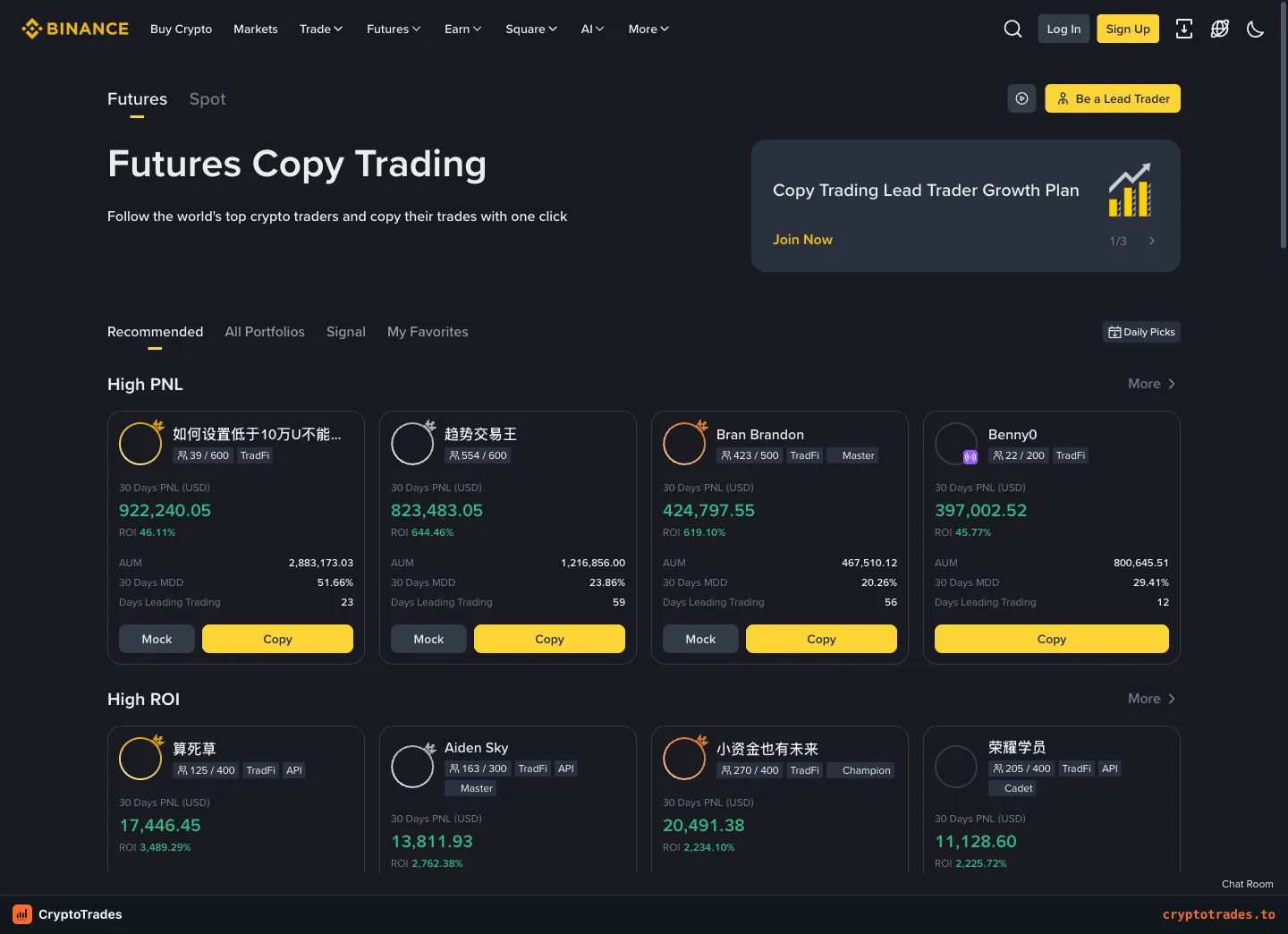
Use maximum drawdown, runtime, concentration and closed history. Set your own allocation and stop rather than inheriting a stranger’s risk budget.
Earn: record the small print
Binance advertises 300+ supported Earn assets. Flexible and locked Simple Earn, staking, Dual Investment, Smart Arbitrage and on-chain yields do not carry equal risk. Promotional APR may apply only to a capped balance and short period; early redemption from locked products can forfeit rewards; advanced products can return a different asset.
Record eligible principal, duration, redemption rule and settlement asset before subscribing. APR is annualized presentation, not a promise that today’s rate lasts a year.
Rewards: up to $1,000 means fee rebates
The current referral page says “up to $1,000 fee rebates” when a referred friend deposits and trades. It does not promise $1,000 cash for opening an account.
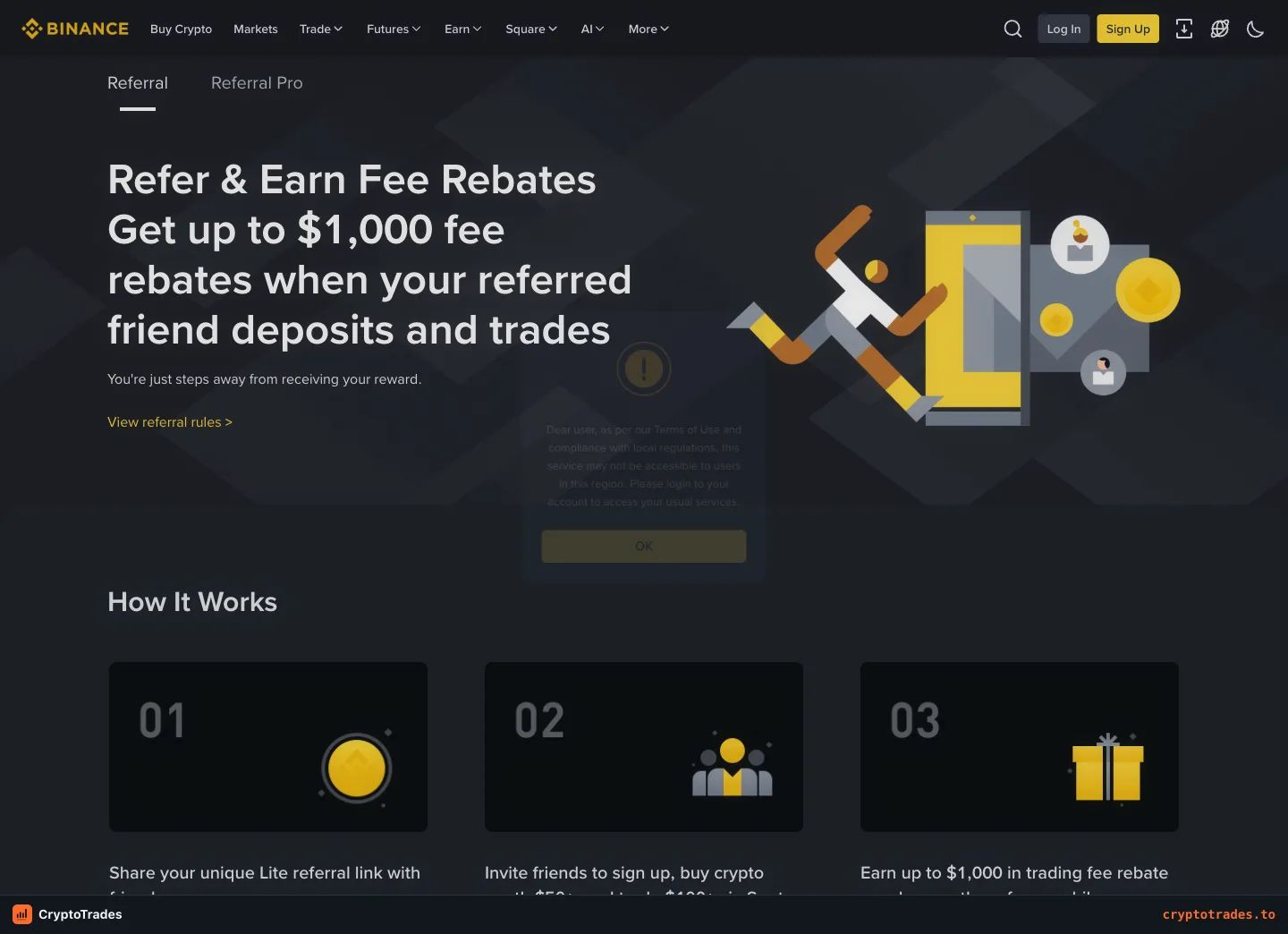
“Up to,” “fee rebates,” and “deposits and trades” each change the economic value. Trial-fund vouchers can also make only generated yield withdrawable, not the displayed principal.
Reserves: strong disclosure, limited conclusion
The live page captured on 2 September showed a 1 September 2026 audit time, zk-SNARK verification, Merkle root and downloadable addresses. BTC and ETH displayed 100.25%, USDT 103.62% and BNB 100.82%.
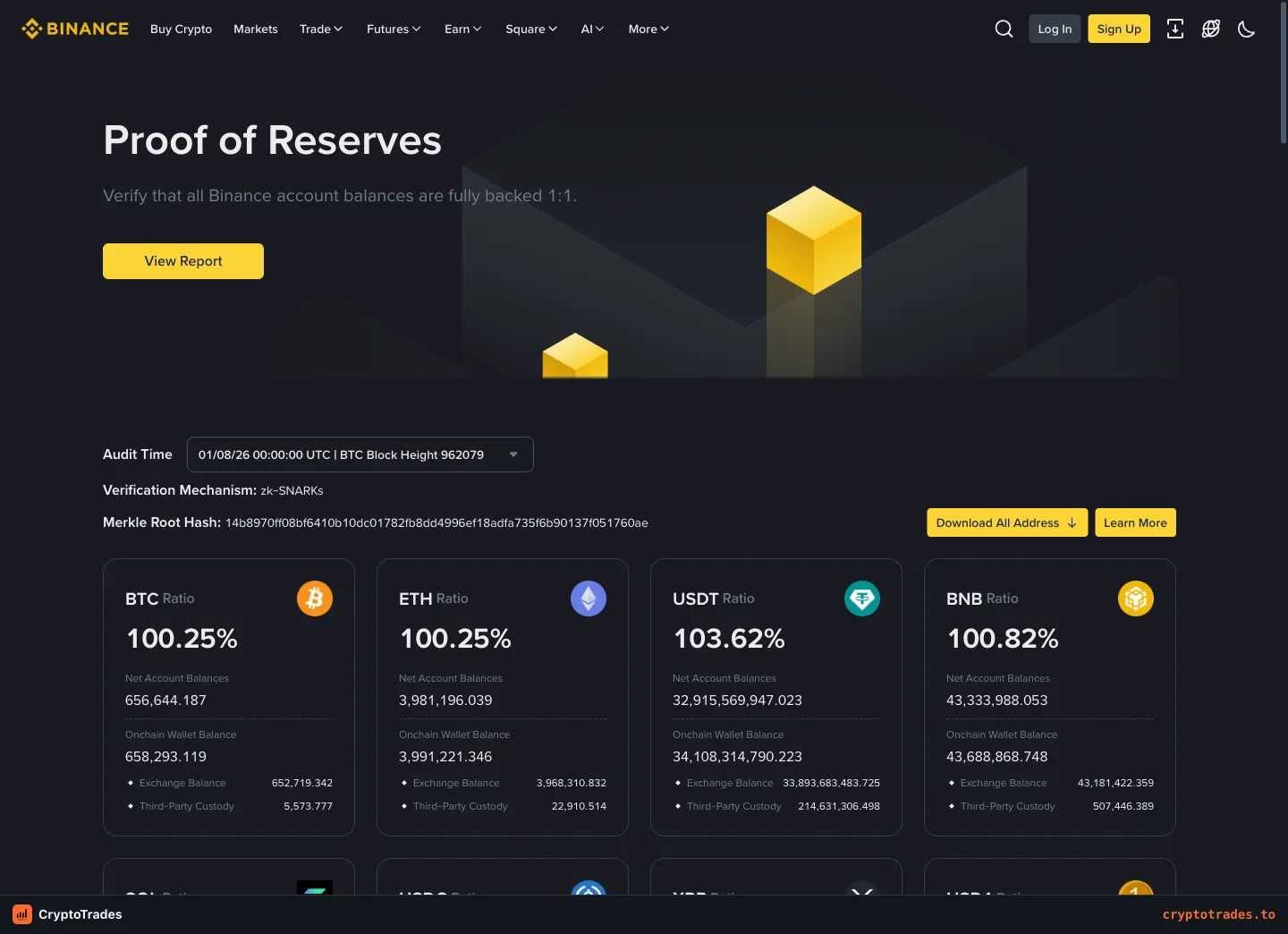
This supports backing of included customer liabilities at the snapshot. It is not a full company balance sheet, deposit insurance or a guarantee of the next withdrawal. Users should verify their own account’s inclusion in the tree.
Security: modern controls and a real breach
Binance supports passkeys, authenticator 2FA, anti-phishing codes, device management and withdrawal controls. Prefer passkeys or an authenticator to SMS. In 2019 attackers withdrew 7,000 BTC and SAFU covered customers. The repayment is evidence of capacity; the breach remains evidence of operational failure. Both inform our 3.9 score.
Deposits, withdrawals and support
Our deposits credited in seconds to a few minutes, and our withdrawals completed in 2 to 60 minutes across repeated use. The slow end tended to coincide with an asset in limited service. Binance support sent its first response in 2 to 5 minutes in our logged-in account tests.
Match both asset and network, send a small test, then send the remainder. Withdrawal fees and minimums vary by network and can change; the confirmation screen outranks a static review.
Methodology
We queried live Google results, People Also Ask, autocomplete, image and video results; inspected competitor coverage; browsed current Binance product UI; visually approved 12 desktop screenshots; measured markets through our collector; and incorporated our repeated deposit, withdrawal and logged-in support tests. Facts are dated and region-qualified.
Where Binance does not accept traders
United States on Binance.com, Canada, Netherlands, Cuba, Iran, North Korea, Syria.
Taken from the venue's own terms. Restrictions change; check before you deposit.
Binance questions traders actually ask
01Is Binance exchange safe?
Binance publishes reserve wallets, liability proofs and account-inclusion verification, and its current prominent ratios were above 100%. It also lost 7,000 BTC in 2019. SAFU covered that incident, but neither SAFU nor reserves turns an exchange balance into an insured deposit. Use a passkey or authenticator and self-custody long-term holdings.
02Is Binance still trustworthy?
It remains the broadest and deepest venue in our measurements and its reserve disclosure is unusually inspectable. Trust should remain conditional on the current entity, a successful small withdrawal and strong account security.
03What are Binance trading fees?
Regular global spot is 0.10% maker and taker, or 0.075% with the displayed 25% BNB deduction enabled. Regular USDT perpetuals are 0.020% maker and 0.050% taker, with a displayed 10% BNB reduction. Regional and promotional pairs differ.
04Is Binance good for beginners?
Convert and spot can work for beginners, but cross margin, derivatives, options, copied traders and leveraged bots are only a menu away. A beginner should avoid borrowing and verify every ticket says Spot before submitting.
05Can US citizens use Binance?
US residents cannot use Binance.com. They must assess the separate Binance.US service where supported, with its own assets, fees and product restrictions.
06Which is better, Coinbase or Binance?
Binance offers more markets, lower active-trading fees and far more derivatives. Coinbase is simpler and provides the relevant regulated route for many US users. Location and experience decide more than the brand.
07Which is better, Binance or OKX?
Binance has slightly more active markets in our database and deeper spot liquidity. OKX starts regular spot makers at 0.08% and has excellent unified-account tooling. Compare the regional entity and all-in cost for your pair.
08Are Binance trading bots free?
There is no separate subscription fee on the built-in page, but bot orders pay trading fees; futures bots add funding and liquidation risk. Free software is not free execution.
09Can a Binance bot lose money?
Yes. Spot Grid can accumulate a falling asset below its range; Futures Grid and DCA add leverage and liquidation; arbitrage can lose through basis, funding reversal and mismatched fills.
10Does Binance have proof of reserves?
Yes. On 2 September the page exposed a 1 September audit time, zk-SNARK verification and ratios of 100.25% BTC, 100.25% ETH, 103.62% USDT and 100.82% BNB. It is a snapshot, not a full corporate audit.
11Why is my Binance withdrawal pending?
Our own withdrawals completed in 2 to 60 minutes. For a pending transfer, check network maintenance, confirmations, a security hold after credential changes, compliance review and the destination network.
Reviewed by CryptoTrades.to
Independent crypto research and market-data team. CryptoTrades.to is a pseudonymous group of crypto specialists active in the market since 2015. The group focuses on Bitcoin, exchange products, market structure and custody risk, and includes a trader with 15 years of market experience. Team members remain anonymous because connecting public identities to cryptocurrency activity and holdings can create personal-security risks.
Scoring method: how we rate an exchange.